In recent years, claims surrounding C. I. Scofield, the Scofield Reference Bible, Christian Zionism, and alleged Rothschild influence have spread rapidly across podcasts, social media, online videos, and internet commentary. One common allegation asserts that the Scofield Reference Bible was not merely a theological study resource, but part of a broader Zionist effort to influence American Christianity and cultivate support for the eventual establishment of the State of Israel in 1948.
Once largely confined to fringe publications and obscure internet discussions, the Scofield–Rothschild theory has increasingly entered mainstream online discourse through viral clips, podcasts, blogs, and social media personalities. Yet many readers remain unaware of where these claims originated or whether the historical evidence actually supports them.
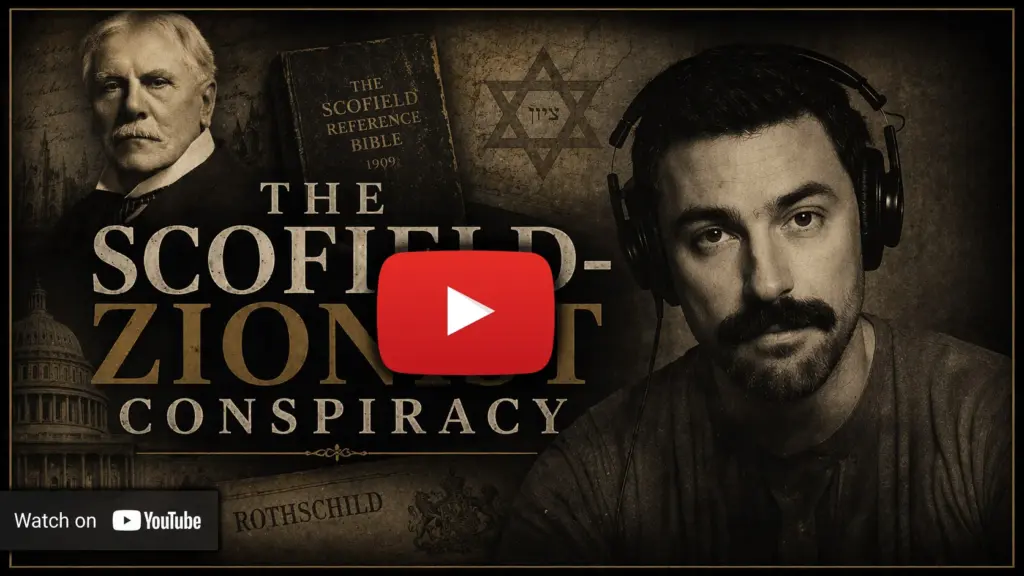
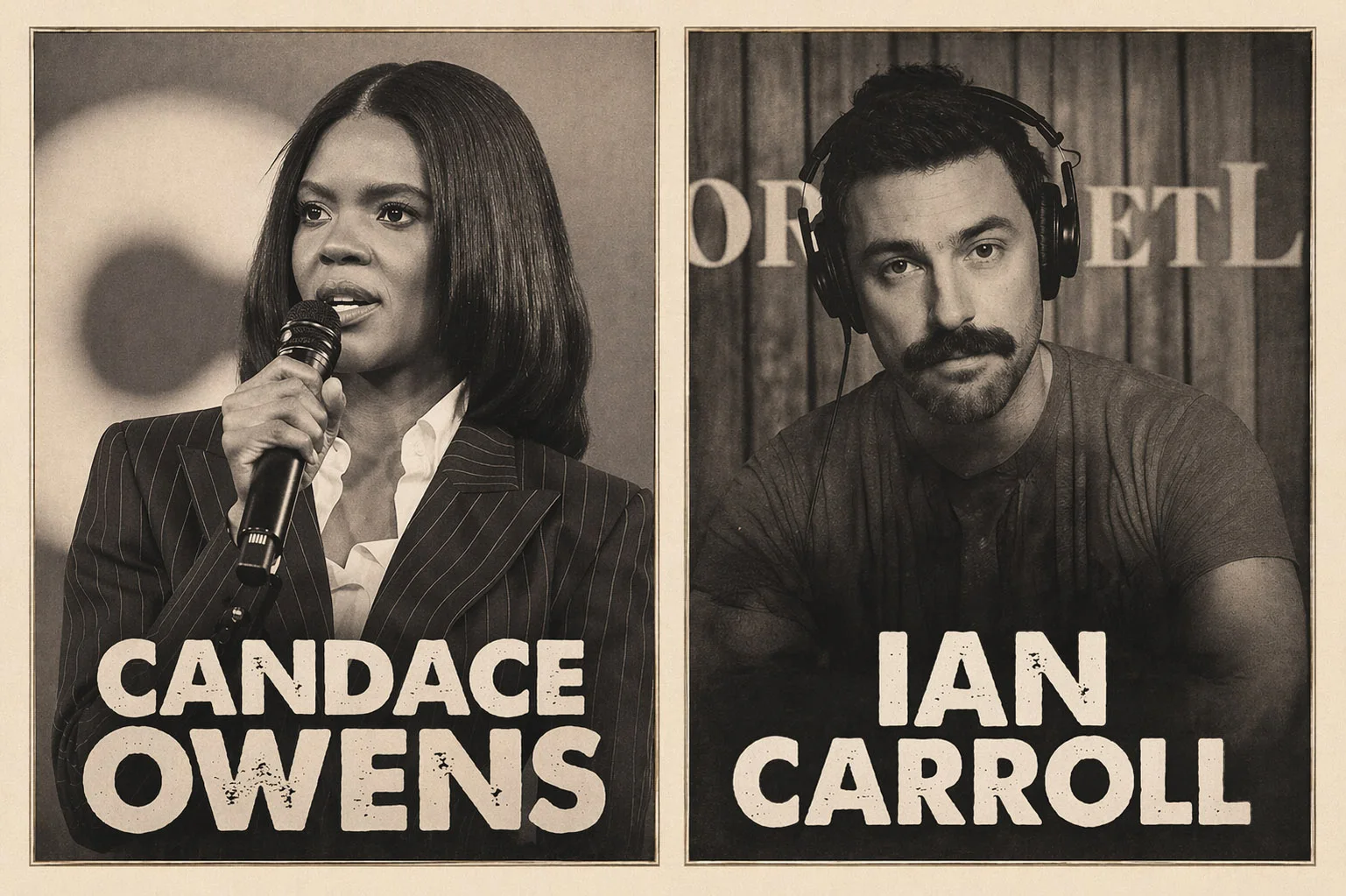
Ian Carroll, the contemporary online commentator appearing in the YouTube clip above, has appeared on the wildly popular Joe Rogan Experience podcast discussing various conspiracy theories. Carroll has gone on record claiming: “…the Rothschild family commissioned Cyrus Scofield… to create a pro-Jewish version of the Bible… with new interpretations of the text…”
These sweeping allegations are not just the isolated claims of edgy pundits. Dr. Michael Rectenwald is a respected American author and former New York University professor. In recent years, he has addressed globalism, elite influence, and related cultural themes—but even this academic has leveled serious charges against the Scofield Reference Bible on X (Twitter). A quick perusal of that social media platform reveals that there is certainly no shortage of users willing to promote this same Zionist mantra.
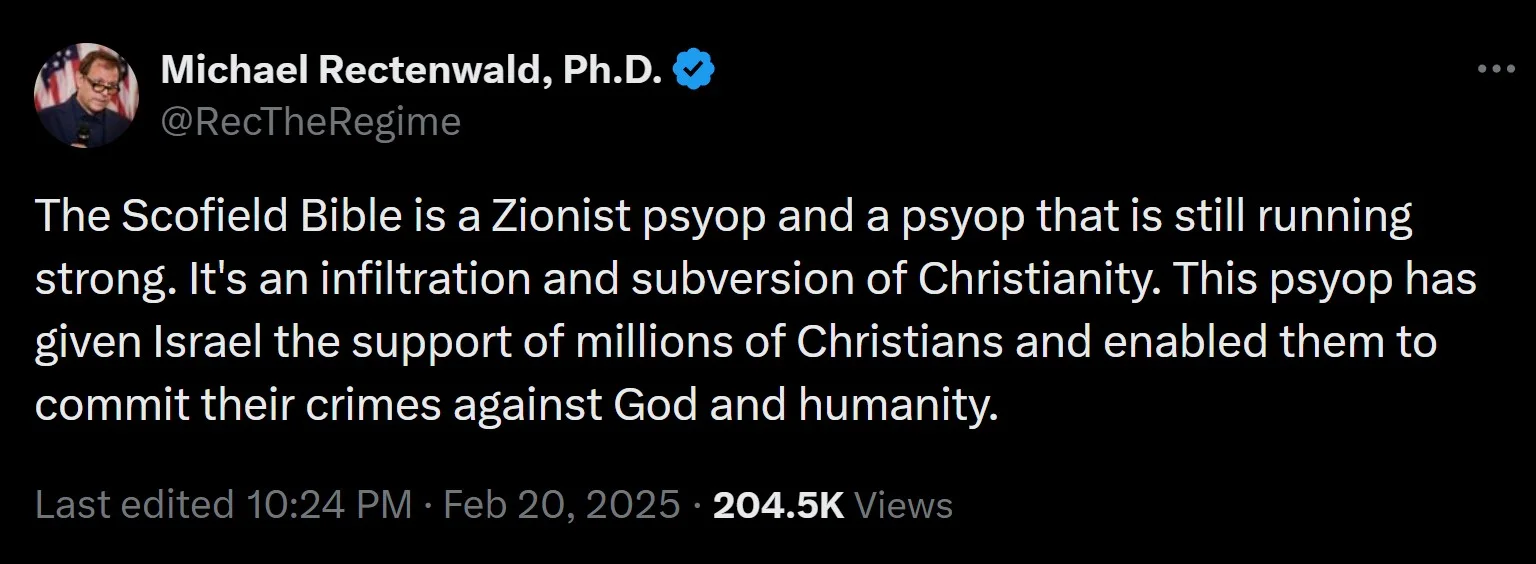
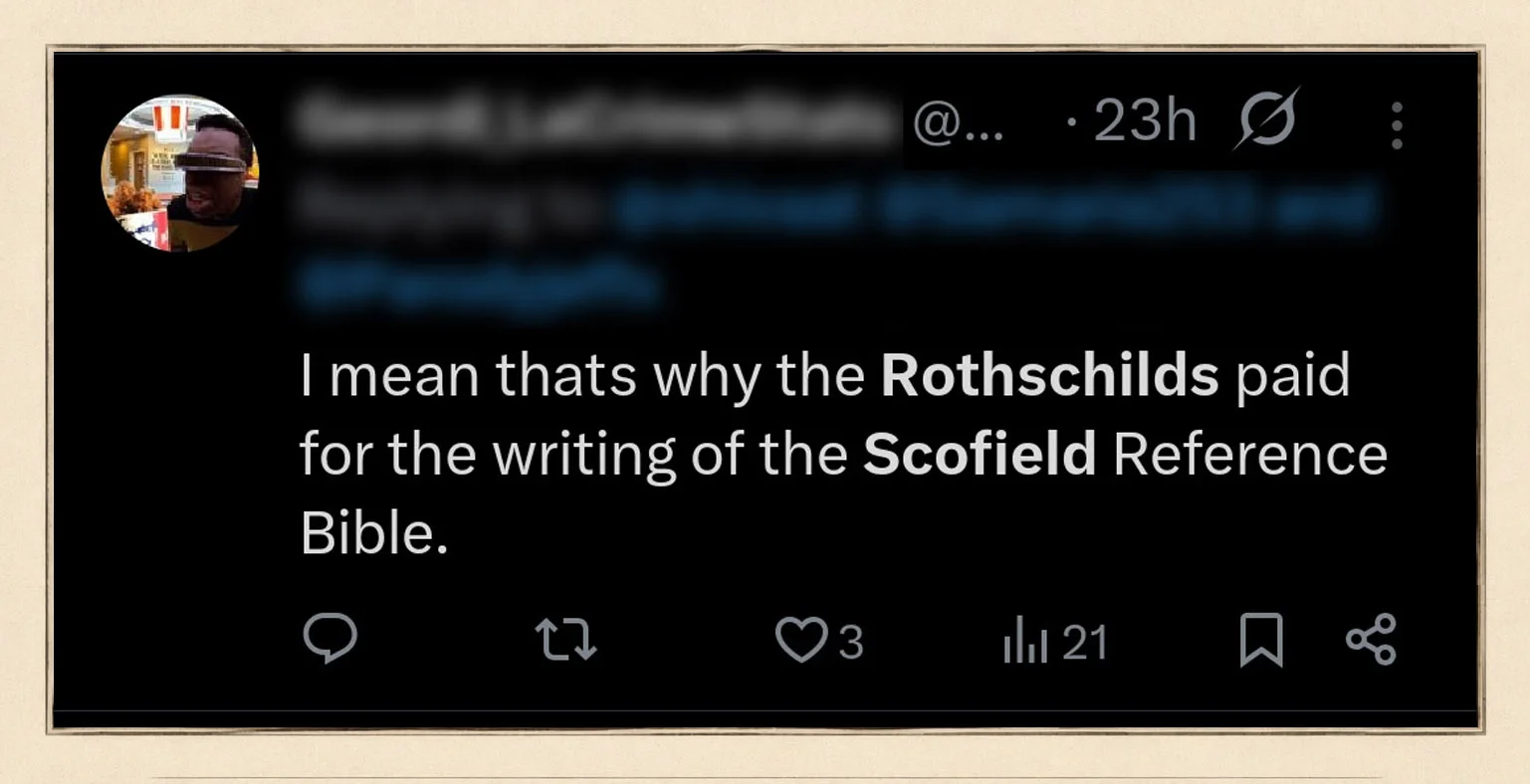
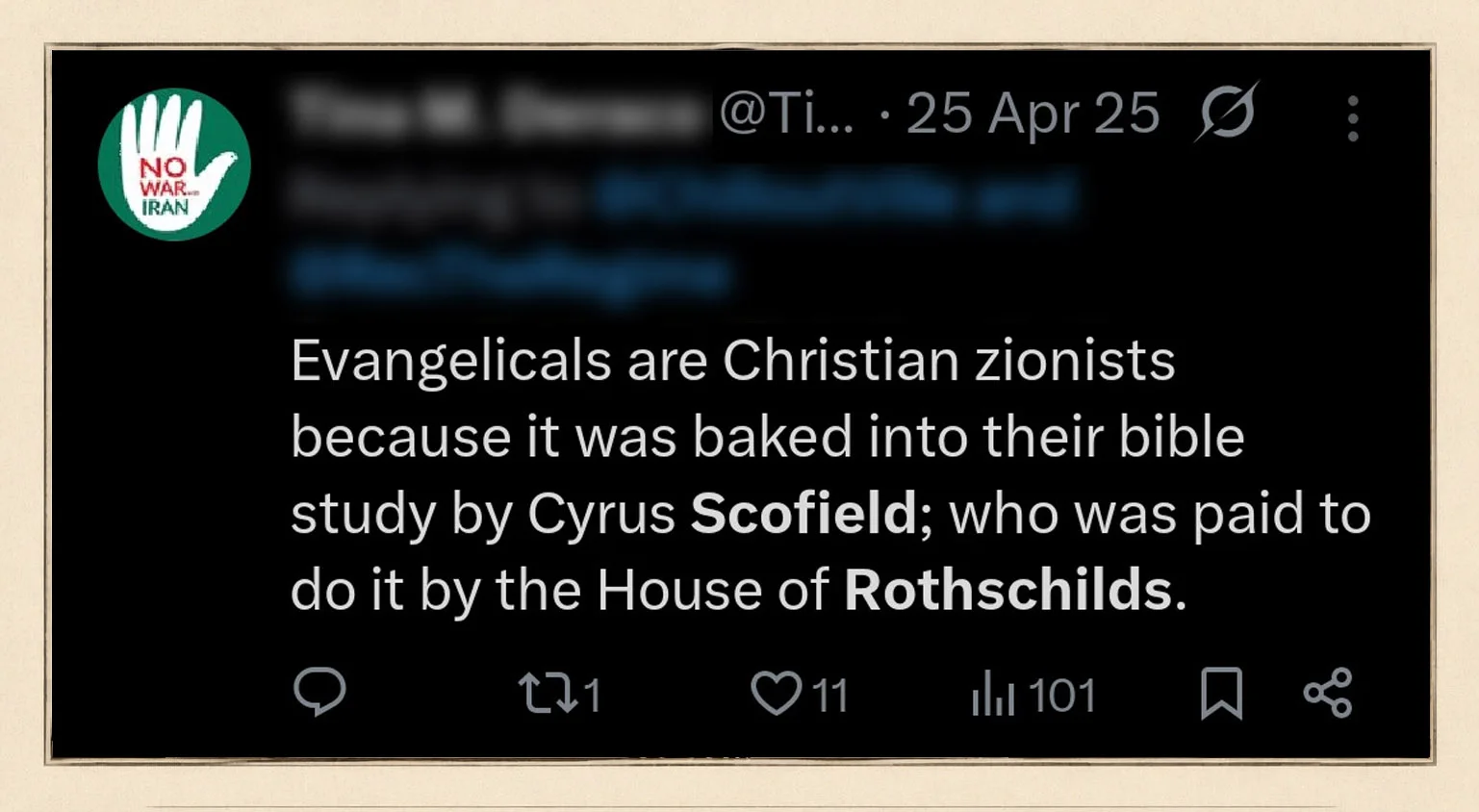
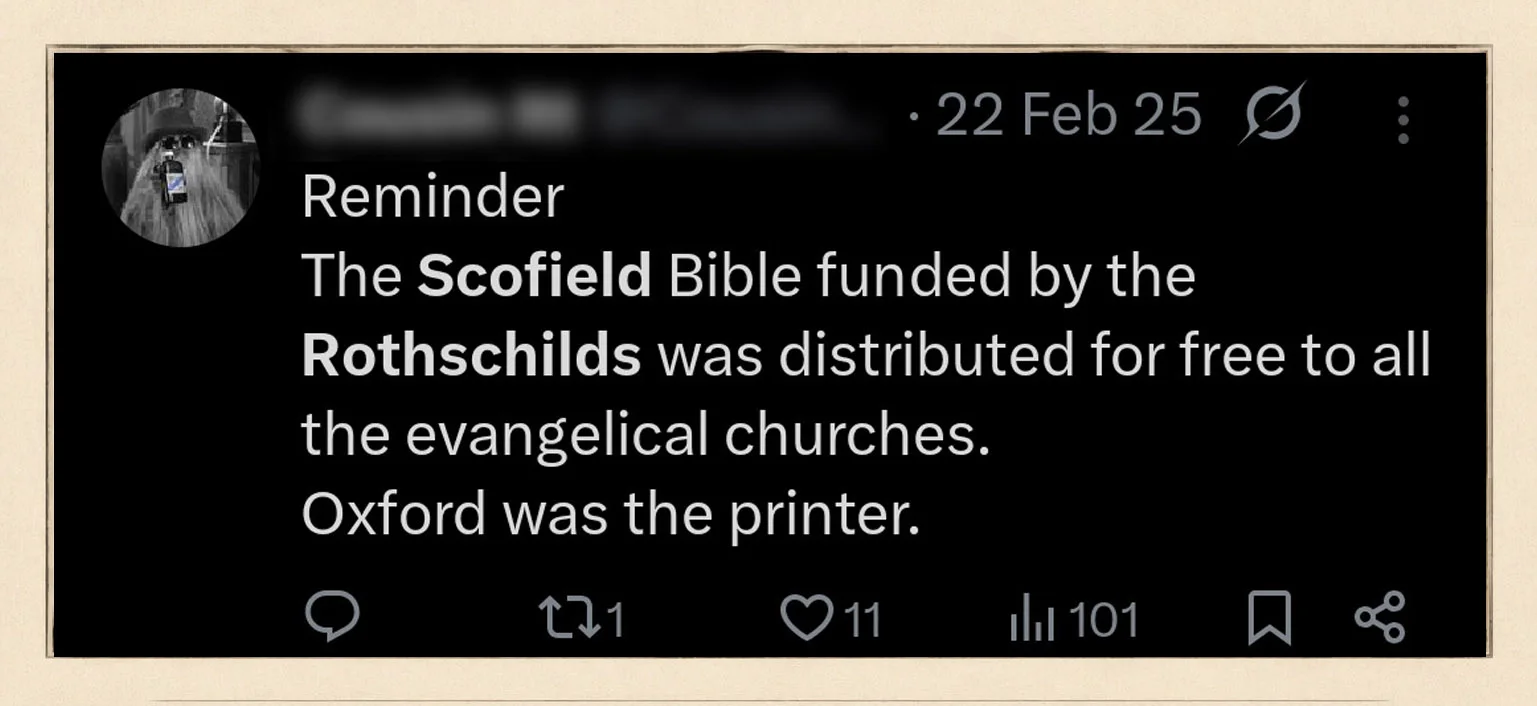
Following the October 7th, 2023 Hamas massacre, the conspiracy theory eventually found a way to go mainstream. The strong military response by the Israeli government in both Gaza and Lebanon added fuel to an already growing blaze of antisemitism. The emotional horrors of war have prompted many in the West to reconsider their support for the young Jewish state. A supposed Zionist plot to influence American Protestantism through Scofield has provided many with the justification they needed to cut theological ties with the Jews.
These strong emotions and damning accusations, coupled with the power of carefully selected podcast clips spreading on social media, have taken a fringe theory and blasted it out to the masses.
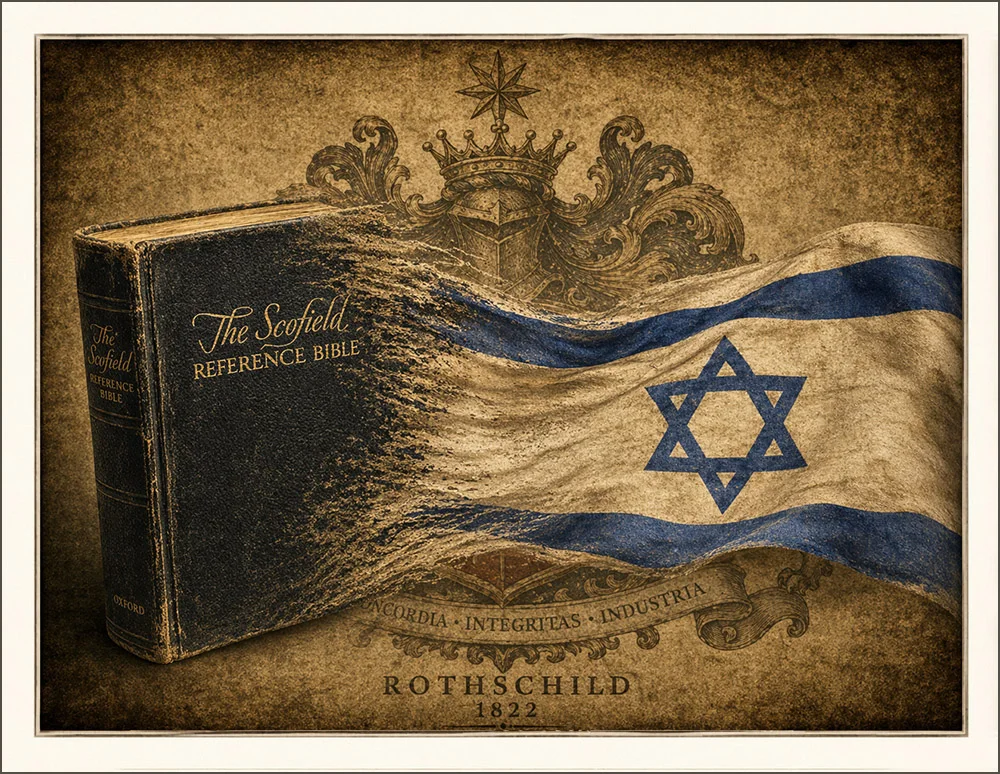
These troubling assertions are often presented with investigative certainty, as though grounded in a well-documented chain of evidence. Yet a closer examination raises a critical question: are these conclusions supported by the data, or are they merely assumptions constantly reinforced by repetition?
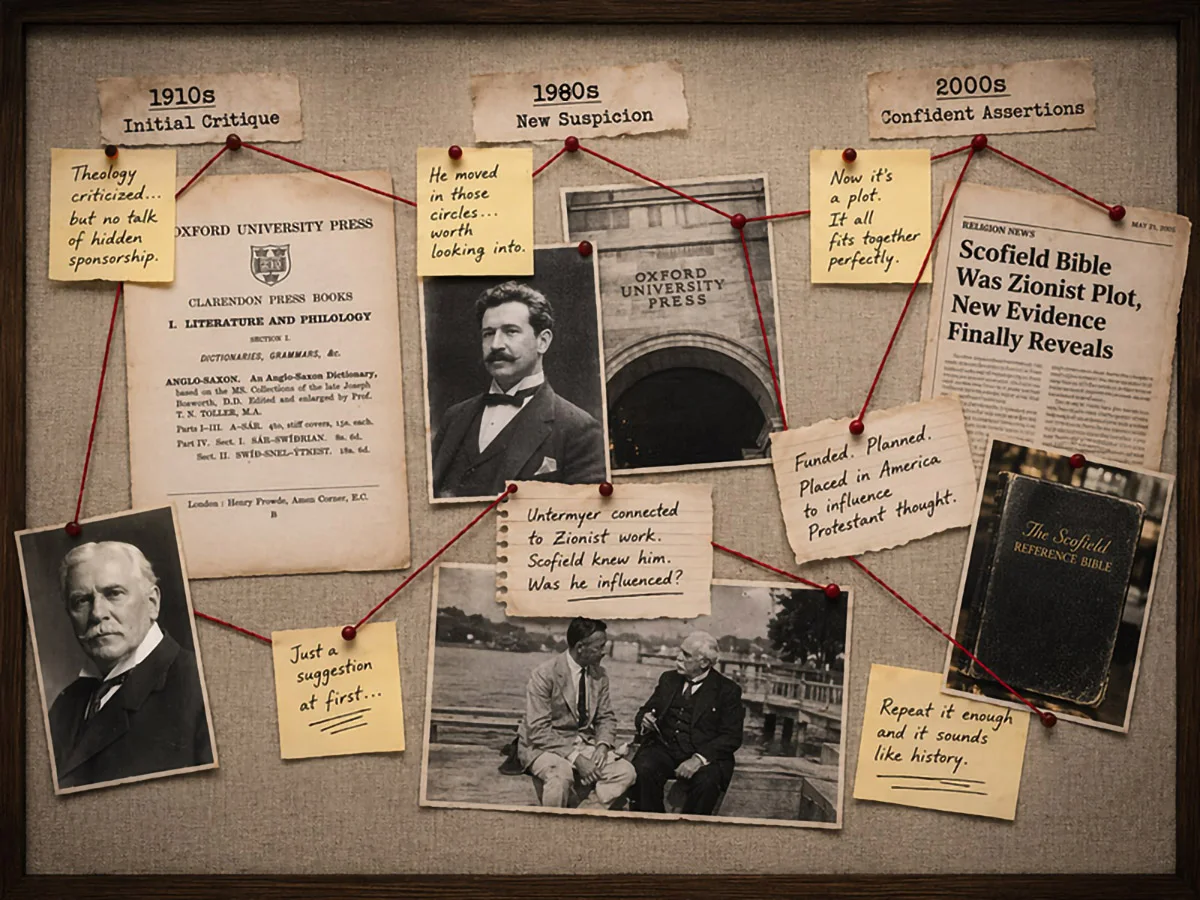
When the evidence is traced, a familiar pattern emerges. One writer (1980s) introduced suspicions around Scofield’s potential professional associations. Then a new group of critics (1990s onward) transformed that unsupported suspicion into exaggerated assertions. Ultimately, a wide range of online articles and blog posts have taken this conspiracy-laden narrative and scattered it with the ease afforded by copy-and-paste.
The development of these challenges follows a common trajectory: initial assumption, confident exaggeration, and web-based repetition.
Historical Research into the Scofield-Rothschild Conspiracy Theory
After extensive historical research, scanning through tens of thousands of documents seeking to trace the conspiracy chain back to its ultimate origin led to a single source: Joseph M. Canfield, an author highly critical of Dispensationalism (Scofield was a Dispensationalist). His scathing biography, The Incredible Scofield and His Book, introduced the first known insinuations about potential Jewish influences on Scofield. It all begins here.
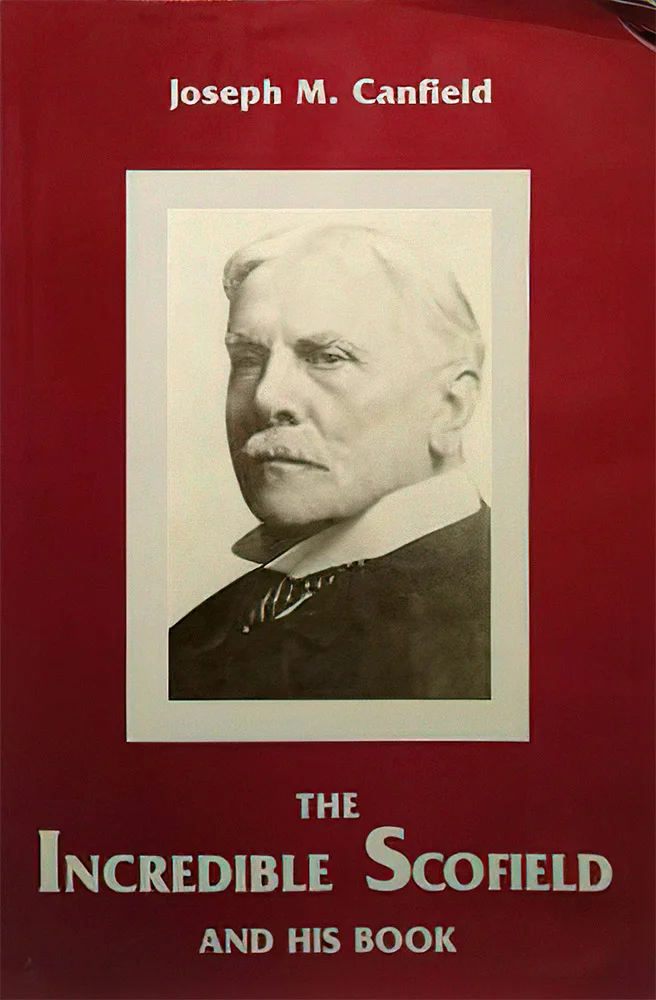
The historical smoking gun is not found in Scofield’s lifetime, but rather in a much later source. In 1988, Joseph M. Canfield published his only book: The Incredible Scofield and His Book (Ross House Books, note: some evidence suggests that Canfield had completed the manuscript as early as 1967).
The following pages and quotes from Canfield’s work show the idea at its earliest stage—where it first appears as an assumption, and long before it is transformed into the elaborate narrative promoted today.
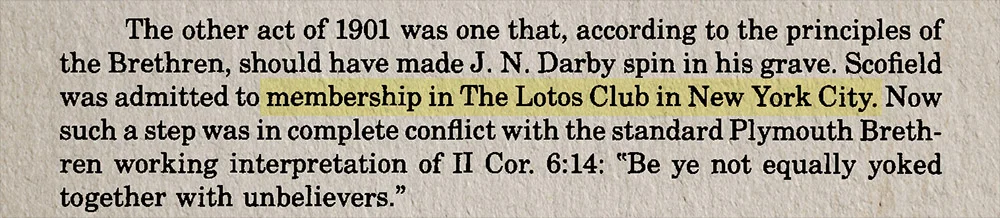
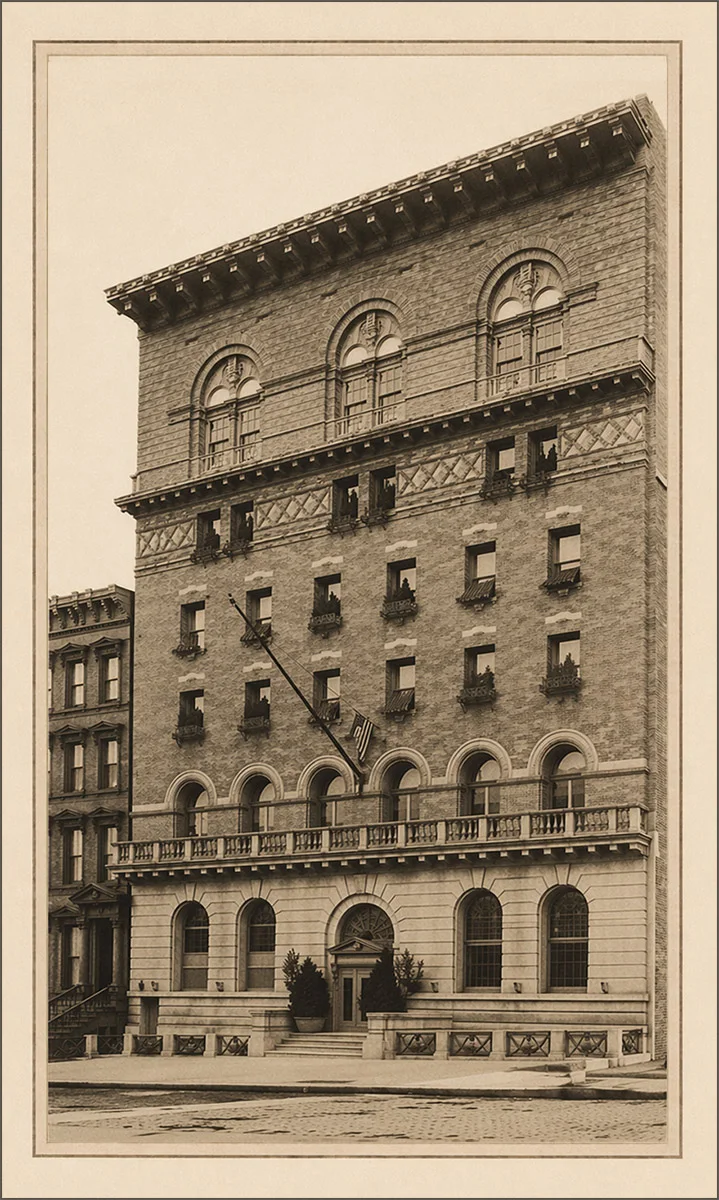
Thus begins Canfield’s extremely subtle suspicions about the potential Zionist corruption of Scofield, found on page 173. The Lotos Club matters because it is the one social fact around which much of the later speculation clusters. Scofield did join the club (March 1900, according to other sources), that much is fact. The Lotos Club was a private social organization in New York City, founded in 1870, known for bringing together individuals in literature, journalism, politics, and the arts. Membership historically included writers, intellectuals, and influential public figures.
Canfield seizes upon this as an apparent discontinuity of faith and practice. “Why would a godly man join such a godless club?” is the force of his argument.
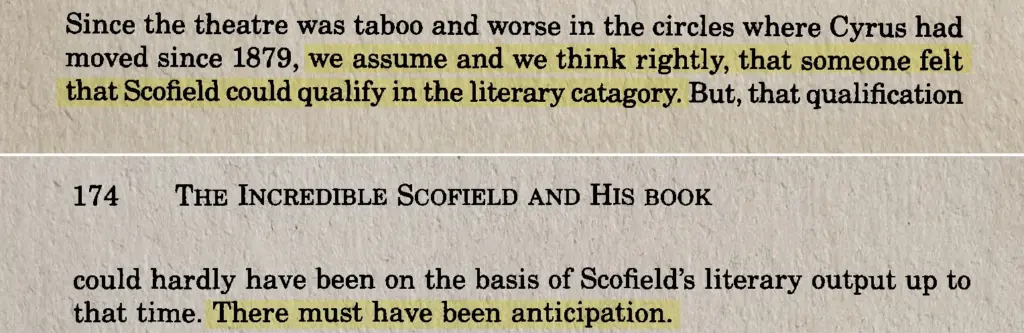
After casting doubt about Scofield’s admittance into the Lotos Club, Canfield begins to construct his case. He covers his intentions quite cleverly, admitting that “we assume” the following to be true. But he is, no doubt, counting on the fact that readers will soon forget those two little words, and will accept his suspicion as truth. He introduces a new character: someone. This someone (whom he will name a few sentences later) saw an opportunity to get Scofield admitted to the Lotos Club. In Canfield’s estimation, Scofield was not yet a sufficiently accomplished author to merit such an honor. In Canfield’s skeptical mind, “There must have been anticipation.” In other words, this someone was planning something BEFORE Scofield was admitted. A plan was being put in place. But who was this crucial someone? Canfield answers:
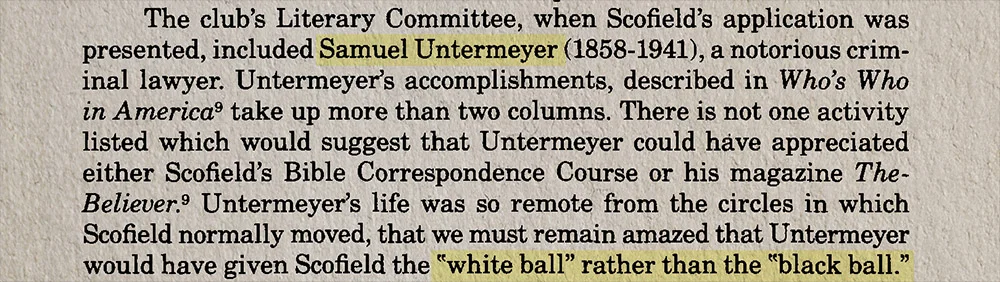
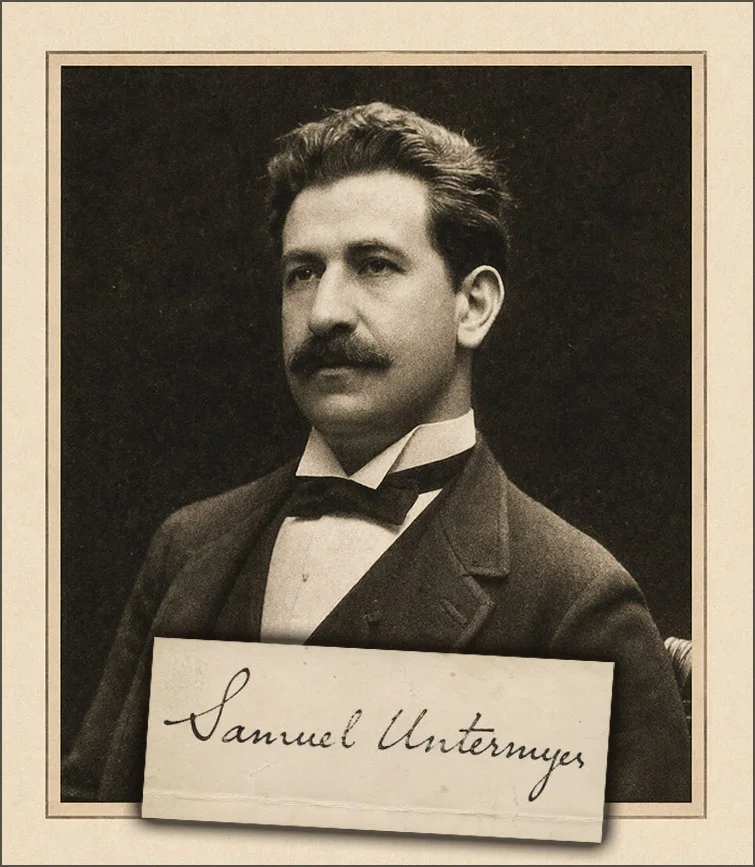
The someone had been unmasked: it was Samuel Untermyer (Canfield spells it Untermeyer, some later writers spelled it Untermeier). This Jewish lawyer had joined the Lotos Club in 1894. He was a member at the time that Scofield was admitted. Membership required both a sponsor, and then another to second that recommendation. Canfield indicates that Untermyer must have given Scofield the “white ball” at some point in the membership process.
Was Untermyer involved in this key process of proposal and seconding? The simple answer is no. We still have the official membership log books from The Lotos Club, and they clearly reveal who sponsored and who seconded Scofield’s membership application, 5th line down on pages 128A/B (March 3, 1900):
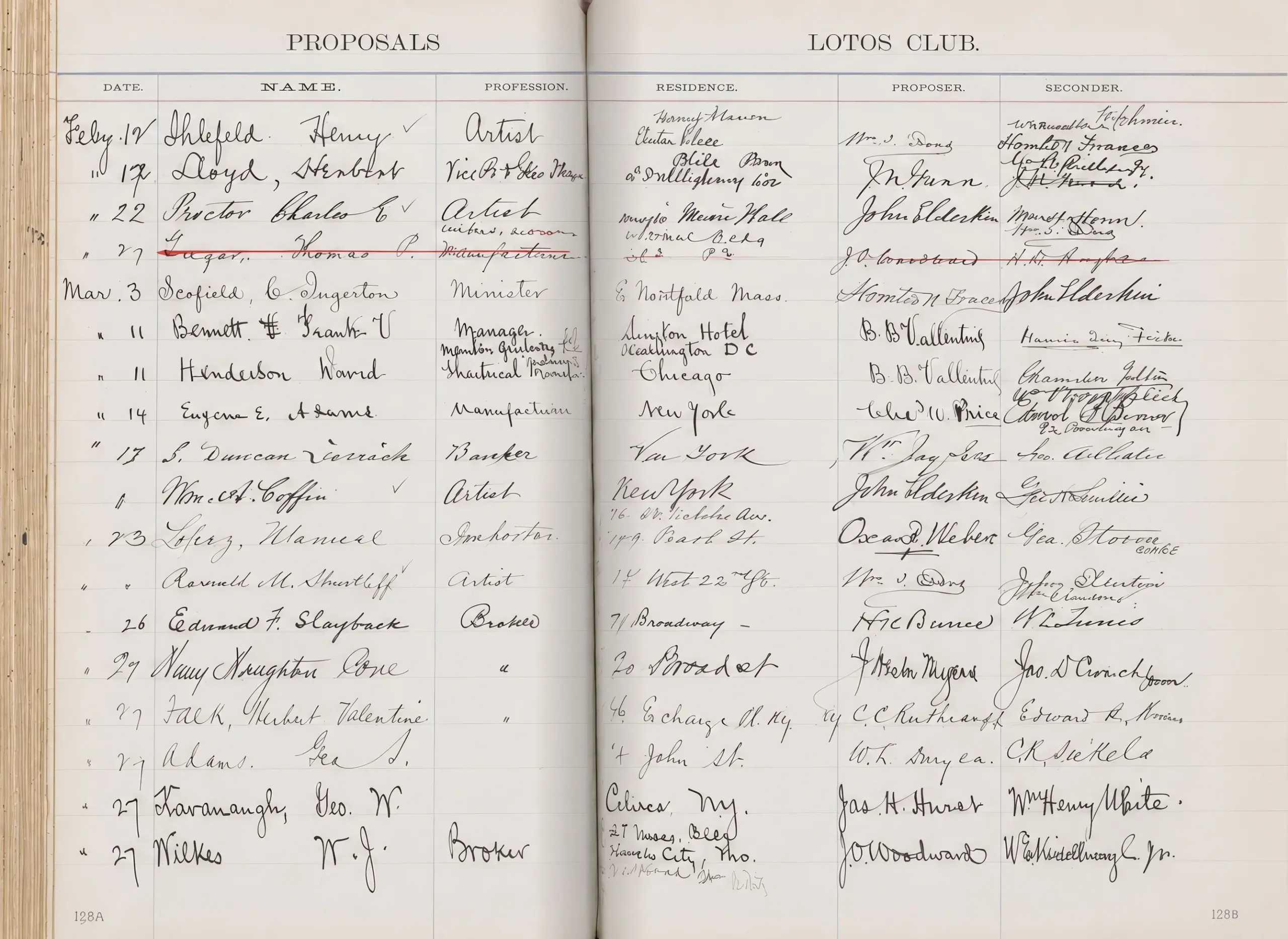

There is no mystery or room for conspiratorial intrigue. Scofield’s membership was proposed by Horatio Fraser, and seconded by John Elderkin. Then, this recommendation was approved by the Election Committee, comprised of William Henry White, John Elderkin, and William Jay Ives (according to researcher D. Jean Rushing’s 2011 thesis: From Confederate Deserter to Decorated Veteran Bible Scholar: an Bible Scholar: Exploring the Enigmatic Life of C.I. Scofield 1861-1921). The names and positions of these other two men (Ives and White) were confirmed through communication with Nancy Johnson, Archivist of The Lotos Club on May 28, 2026:
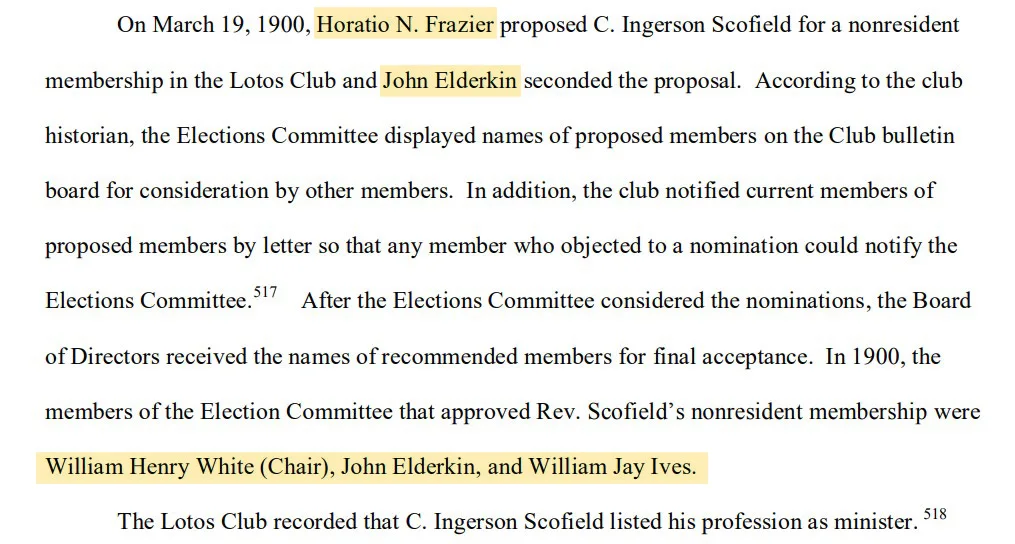
According to Lotos Club Archivist Nancy Johnson: “In 1900, the Club constitution said this: ARTICLE VIII: SECTION I: Names of candidates shall be entered in a book to be kept in the office of the Club. After such entry is made and signed by the proposer and seconder, the name of a candidate shall be posted on the bulletin-board for at least two weeks before being acted upon by the Directory. The proposer of a candidate for admission to the Club is required to send to the Committee on Admissions a letter giving the name and place of residence of the candidate, his profession or occupation, and such statement of his qualifications as the proposer may deem proper. A letter of recommendation is also required from the seconder. SECTION II – The Directory shall vote by ballot for each person proposed, whose name shall have been reported to the Committee on Admissions, and such person shall be declared elected, unless two ballots are cast in the negative.”
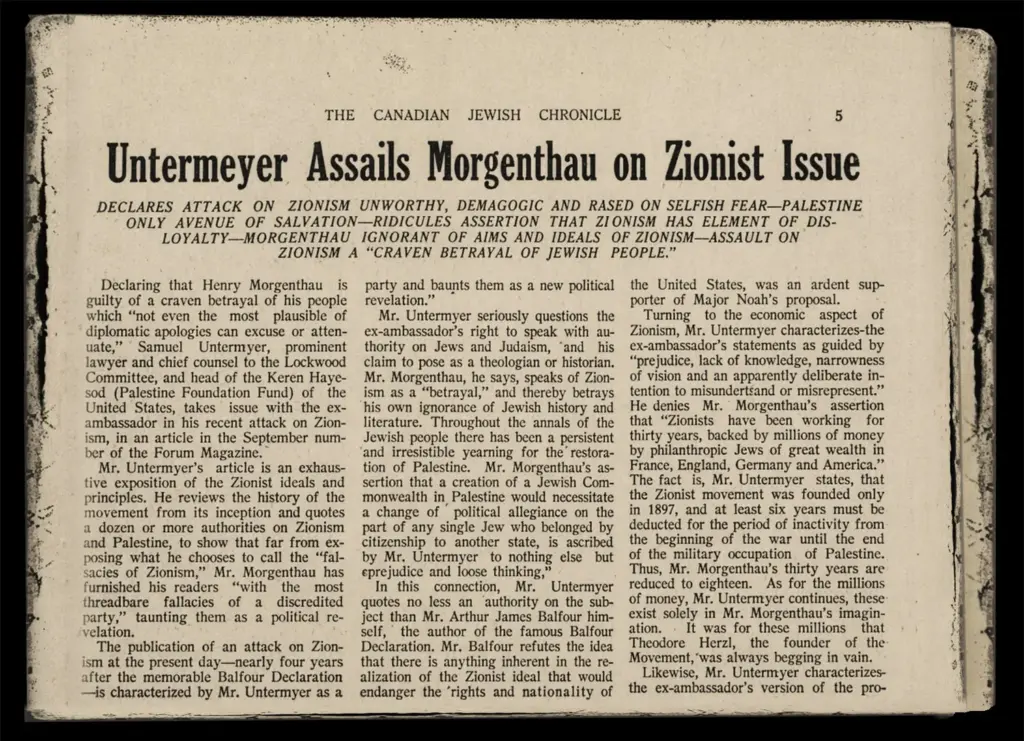
Samuel Untermyer was a member at the time that Scofield’s admission was being voted upon, but his vote for Scofield would not affect the process, only a vote against him would – as long as a second person also voted in the negative). But regardless of these facts, Canfield’s insinuation that Samuel Untermyer was guiding that process gets upgraded:

Canfield had moved in fairly modest steps up to this point, but then took a tremendous leap (page 174). He was hunting for clues, and then discovers one… a theological fingerprint, so to speak. As Canfield put it, Scofield taught the “postponed Kingdom theory” – the position that God made literal land promises to Abraham and his descendants, involving a future kingdom with the Messiah ruling from Jerusalem. This kingdom was initially “postponed” when the Jews rejected Jesus.
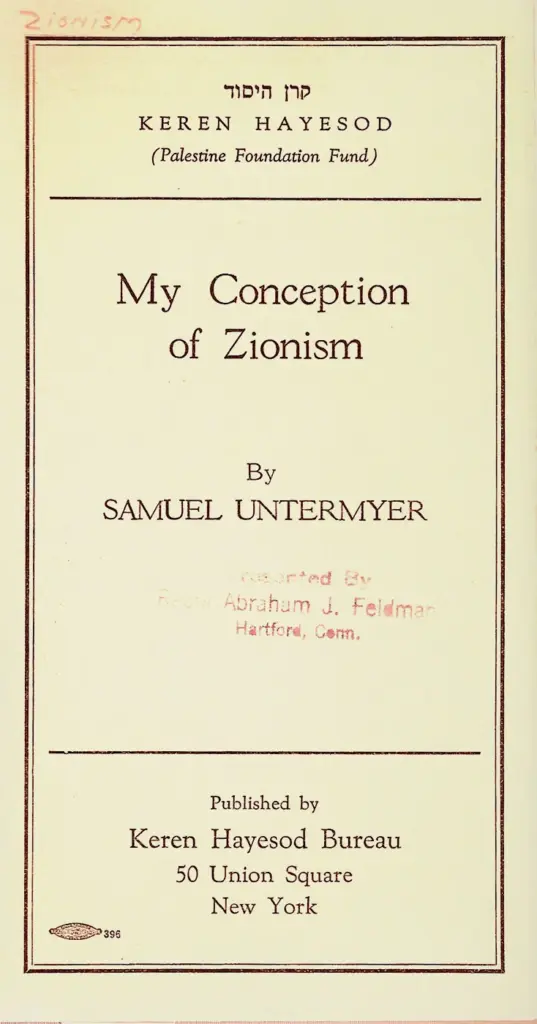
Canfield, the detective, tried to solve a mystery largely of his own making. But he found a clue: Scofield taught that the Jews will one day return to their homeland, and Samuel Untermyer was involved in Zionism, a movement seeking a Jewish homeland. Canfield insinuated that Untermyer used Scofield, an unqualified Christian author, to push a particular Jewish agenda.
This is where Canfield’s nagging suspicion begins. He asserts that Scofield’s membership is unusual on two fronts:
(1) As a Christian, Scofield should not have been associated with such a secular group.
(2) Scofield was an unlikely candidate due to his lack of literary depth.
First, rather than compromising his faith, such associations provided opportunities for an up-and-coming Christian figure to interact with influential audiences and participate in a wider discourse. In that context, membership in a literary club was less about a secular club and likely more about being present in the circles where ideas were exchanged and shaped.
Regarding his unlikely candidacy, it isn’t that surprising that a prominent Christian speaker and writer like C.I. Scofield would have been admitted to the Lotos Club. The organization valued public influence, literary output, and speaking reputation. Additionally, Scofield was connected to very popular figures, such as D.L. Moody, which gave him immediate credibility.
Everything hinges on one basic premise: Scofield and Untermyer were close associates at the Lotos Club.
But there are a few problems with this necessary condition:
(1) The Lotos Club had several hundred members. Even if Scofield and Untermyer were at every event for many years, there is no guarantee that they would have even encountered one another.
(2) There is not a single mention of Untermyer in any document by Scofield. If Untermyer were a pivotal mentor or a “career guide” then surely Scofield would have mentioned his name in a letter or in a documented conversation.
(3) Untermyer never mentioned Scofield in any known letter, speech, booklet, pamphlet, or telegram.
(4) The first person known to attempt to connect Scofield and Untermyer is Joseph Canfield in 1988.
There is no doubt, Samuel Untermyer was a key figure in Zionism in the 20th century. But there is a problem for Canfield’s suspicion that Untermyer coached or guided Scofield. And that problem is TIMING: the timeline simply doesn’t support the tenuous claim very well. Samuel Untermyer did not emerge as a prominent Zionist activist until the early 1920s, whereas Scofield had already developed his Dispensational views on Israel by the early 1880s and published the Scofield Reference Bible in 1909.
Scofield’s theology was fully formed and widely disseminated decades before Untermyer’s Zionist involvement became active, making any direct influence chronologically implausible (but not impossible). In addition, Scofield died on July 24, 1921, just as Untermyer was gaining traction in the Zionist cause.
The CTRL (Conspiracy Theory Research List) mailing list, associated with Kris Millegan during the late 1990s, became an influential early-internet hub for alternative research and conspiracy discussions. Millegan—founder of TrineDay Publishing, known for books on political conspiracies, secret societies, intelligence operations —helped foster an environment where independent researchers exchanged theories, documents, and archived materials involving global finance, assassinations, intelligence agencies, and hidden power structures. Millegan shared “The Unified Conspiracy Theory” document on Friday, July 16, 1999 (https://www.mail-archive.com/ctrl@listserv.aol.com/msg18378.html):
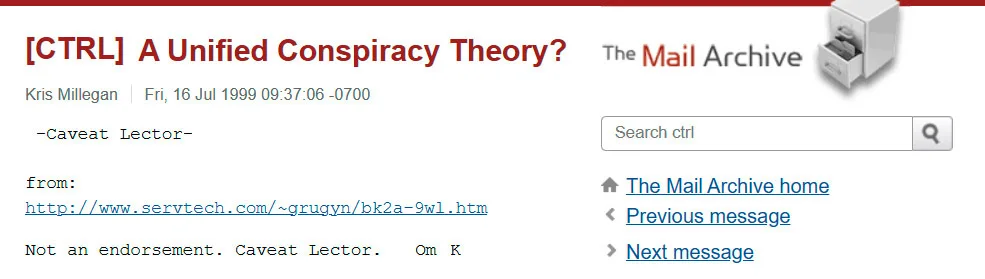
Notice Kris Millegan’s disclaimer: “Not an endorsement. Caveat Lector.“ The latter is a Latin phrase meaning “Reader Beware.” This was a common way that Millegan shared questionable articles written by others to his wide reader base. The version of “The Unified Conspiracy Theory” (at the time of his sharing) was about 14,000 words, but later versions are over 90,000 words. Here is a small snippet about Scofield:
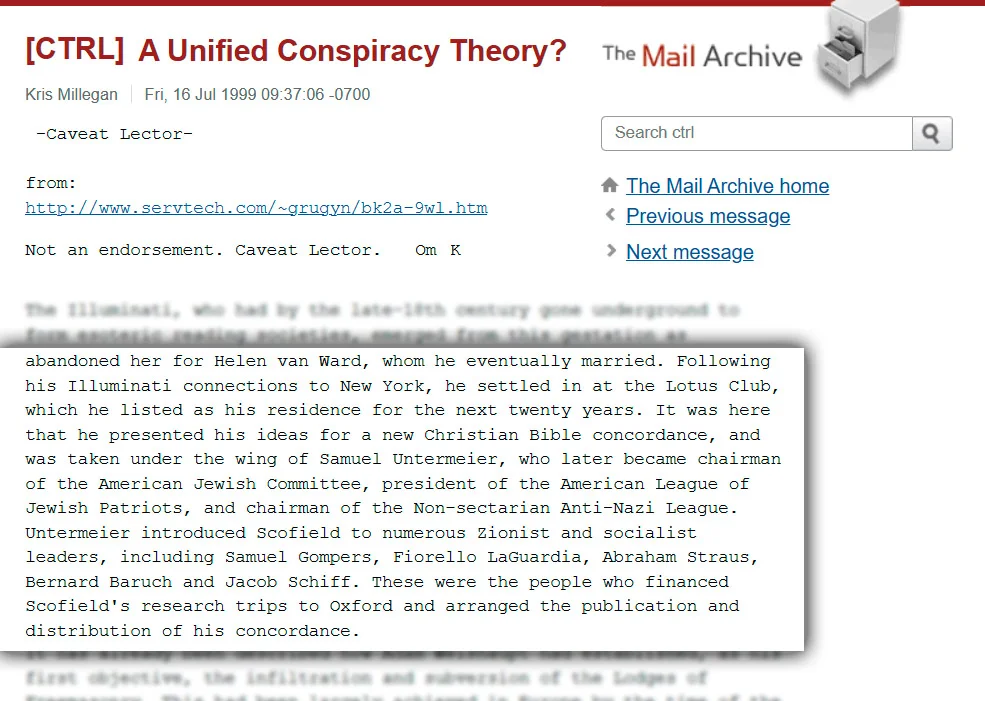
The exaggerated claims are breathtaking, but are otherwise sadly quite normal for conspiracy theory documents from this era. The article attempted to connect Scofield to the Illuminati (!) and takes Canfield’s assumption about Untermyer and converts it into an assertion: “(Scofield) was taken under the wing of Samuel Untermeier…” There is no evidence that the two ever met, yet here we see an association and manipulation stated as absolute fact. Caveat Lector, for sure.
The document throws out 5 names of well-known Jewish businessmen and Zionist activists: Samuel Gompers, Fiorello LaGuardia, Abraham Straus, Bernard Baruch, and Jacob Schiff, and then claims that Untermyer introduced Scofield to them. Additionally it asserts that they funded Scofield’s travels and arranged publication and distribution of his study bible (incorrectly called “his concordance.”). Outside of this “reader beware” document, there is no primary source material dating from Scofield’s era that connects him in any way to any of these men. Listing out well-known figures in this manner is a common technique in conspiracy theory literature, as it creates the appearance of research and credible detail. Unfortunately for this attack piece, we know where the sources of Scofield’s financing originated, but we will examine that later. Next, let’s examine who the authors of “The Unified Conspiracy Theory” were:
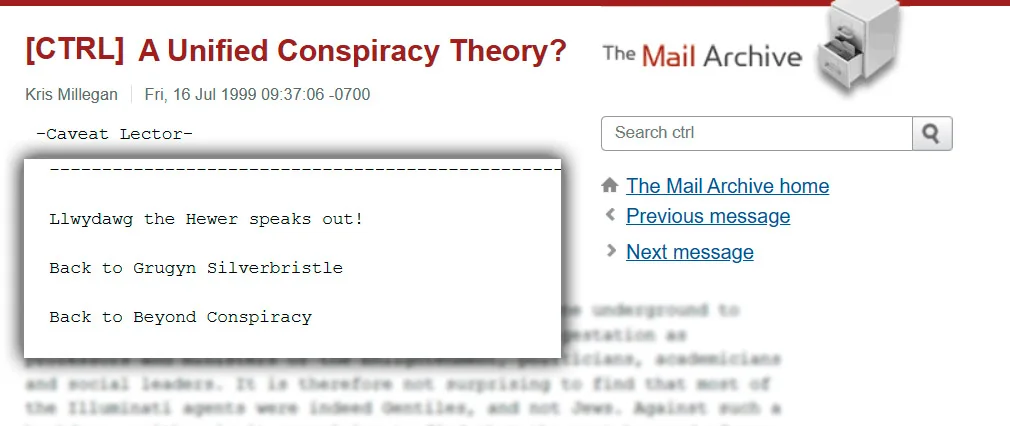
Llwydawg the Hewer (and possibly Grugyn Silverbristle)? If those names sound obscure, it’s because they are. These pseudonymous identities (fake or pen names) appear to have been borrowed from medieval Welsh Arthurian mythology, particularly the tale of Culhwch and Olwen. The use of false names is, once again, a common practice for these types of sweeping conspiracy theory narratives.
“The Unified Conspiracy Theory” was heavily copied, reposted, and excerpted during the early 2000s. Referring back to conspiracy theorist Ian Carroll (top of the page), it would seem, from his appearance on the Hodgetwins podcast, that he may have (even unknowingly) borrowed much of his diatribe against Scofield and the Scofield Reference Bible from this elaborate hypothesis. To illustrate its likely immediate impact, let’s examine one online writer who even penned a bold article entitled “The Zionist-created Scofield bible” during this era.
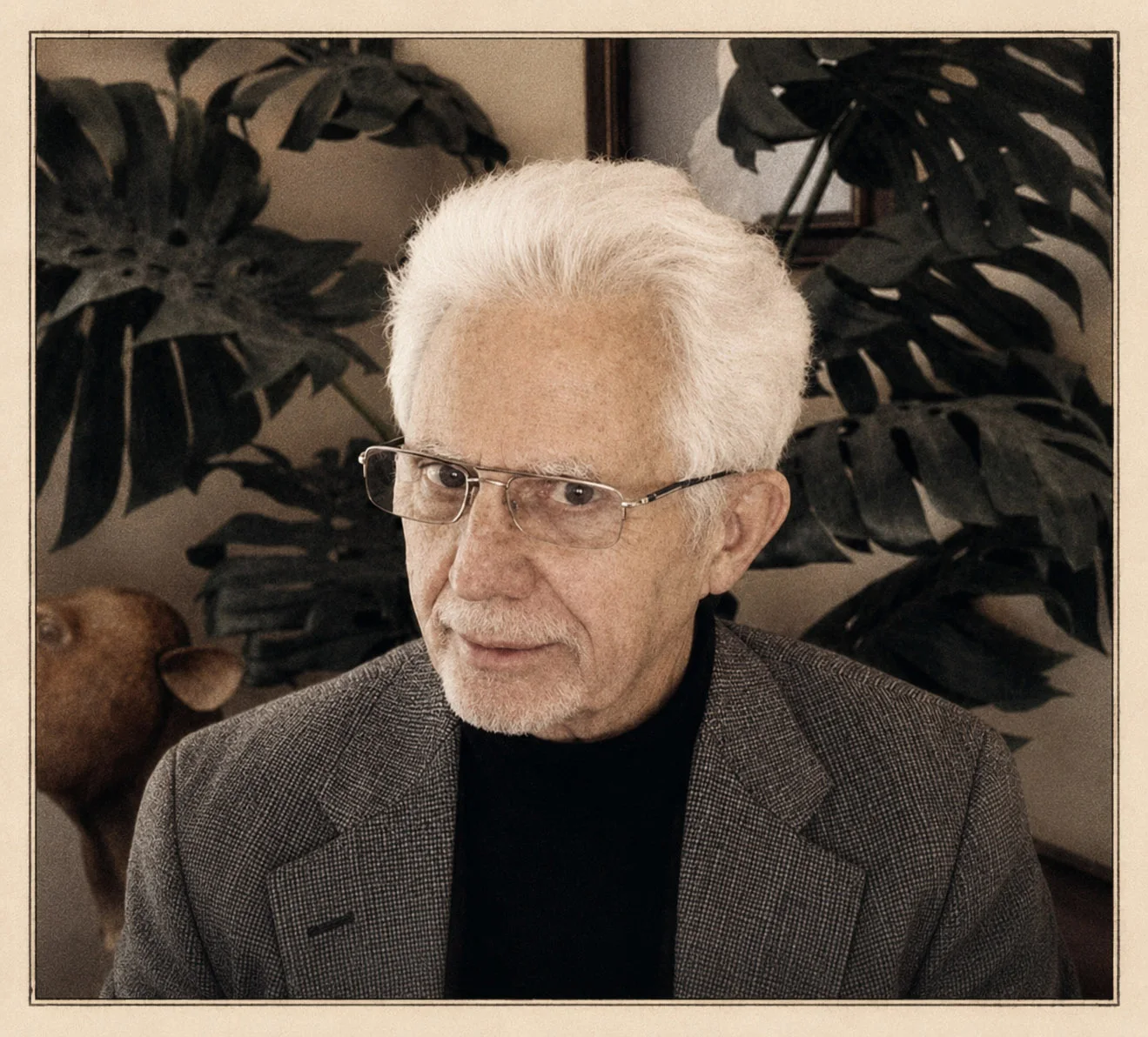
Charles (C. E.) Carlson was an early internet popularizer of the types of claims in “The Unified Conspiracy Theory.” In short, that the Scofield Reference Bible was specifically crafted to advance Zionist political objectives. Carlson also expanded themes first introduced in Joseph Canfield’s 1988 book linking Scofield, Samuel Untermyer, and Christian Zionism.
Sometime on or before November 30, 2002, he published an online article titled: “The Zionist-created Scofield “bible”” at the (now defunct) site http://christianparty.net/scofield.htm (repeated HERE). Here is a typical excerpt:
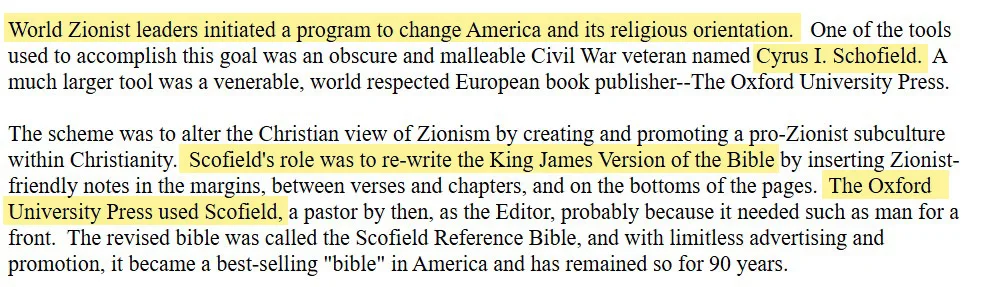
His sweeping charges are enormous in scope. “World Zionist leaders initiated a program to change America” using Scofield as a “tool” in order to “re-write the King James Version of the Bible.” And Carlson even implicated the publishing company which printed the Scofield Reference Bible as part of this grand political-cultural-religious strategy: “The Oxford University Press used Scofield…” A far cry from Canfield’s simple assumption about a possible connection with Untermyer. But the conspiracy would grow even further…
Who funded the Scofield Reference Bible?
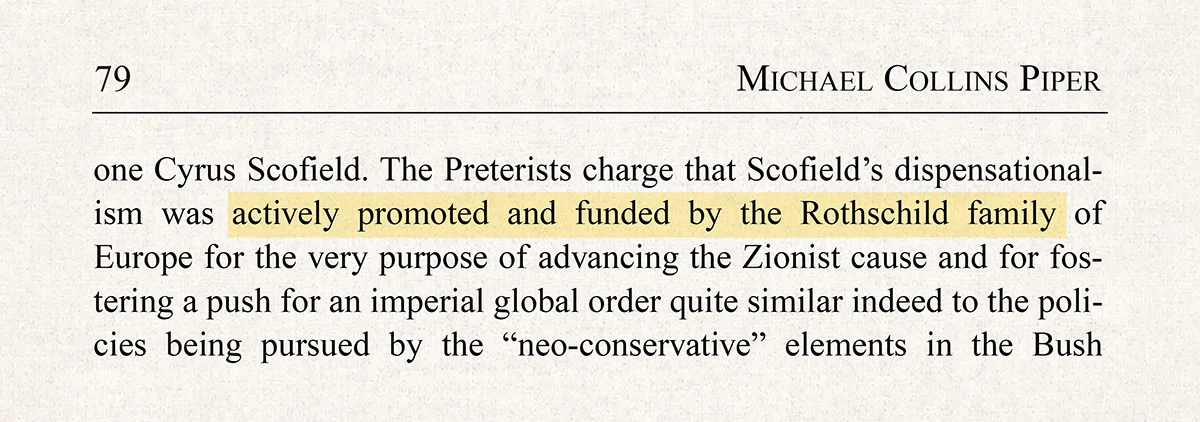
Canfield looked for a clue, and it was a man (Untermyer). Piper needed a villain, and it was a family (Rothschild).
The introduction of the Jewish Rothschild name into Piper’s narrative is not incidental. It reflects a long-standing trend in modern conspiracy literature. Since the 18th century, the Rothschilds have been associated with international finance. However, this association has been amplified and distorted in popular media, where the family is frequently cast as a sinister, behind-the-scenes force shaping questionable global events.
Piper capitalizes on this dark reputation, and injects it into the Scofield narrative without any documentation, attributing it to hearsay from Preterist sources.
It is crucial to note that Piper does not mention the Rothschilds in passing, his book says that the Rothschilds actively FUNDED Scofield. But remember, Piper’s 2004 book (over 15 years after Canfield) is the first known claim that the Rothschilds were involved in any capacity in the work. Did they finance Scofield? Unfortunately for Piper’s conspiracy connection we have multiple contemporaries of C.I. Scofield who list out all of the financial backers of this work… and none of them are Rothschilds. And none of them were even Jews. And worse yet for his theory, most of these records go back to the actual period in question.
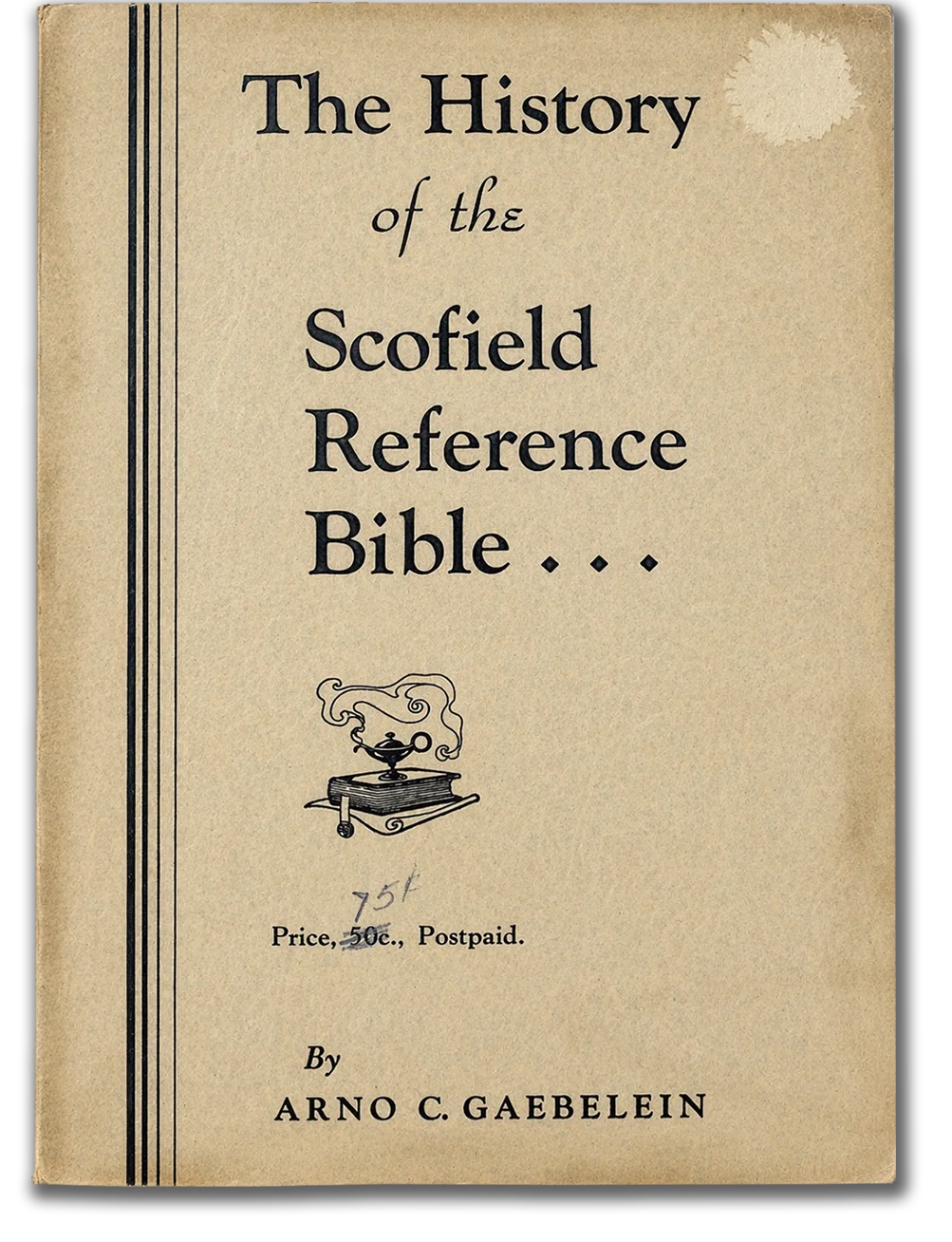
Arno C. Gaebelein (1861–1945) was a German-born American Bible teacher and author. A close associate of C. I. Scofield, he served as a consulting editor on the Scofield Reference Bible. His direct involvement gave him a valuable insider’s perspective on its origins and development. Writing as a participant rather than a critic, his account reflects firsthand knowledge of the people, process, and circumstances behind the project.
In 1943, as the globe was still in the throes of a second world war, Gaebelein published The History of the Scofield Reference Bible (Our Hope Publications). He recounts the origins and development of the project — including securing financial support and organizing contributors — while presenting the work as a straightforward product of evangelical initiative rather than hidden influence.
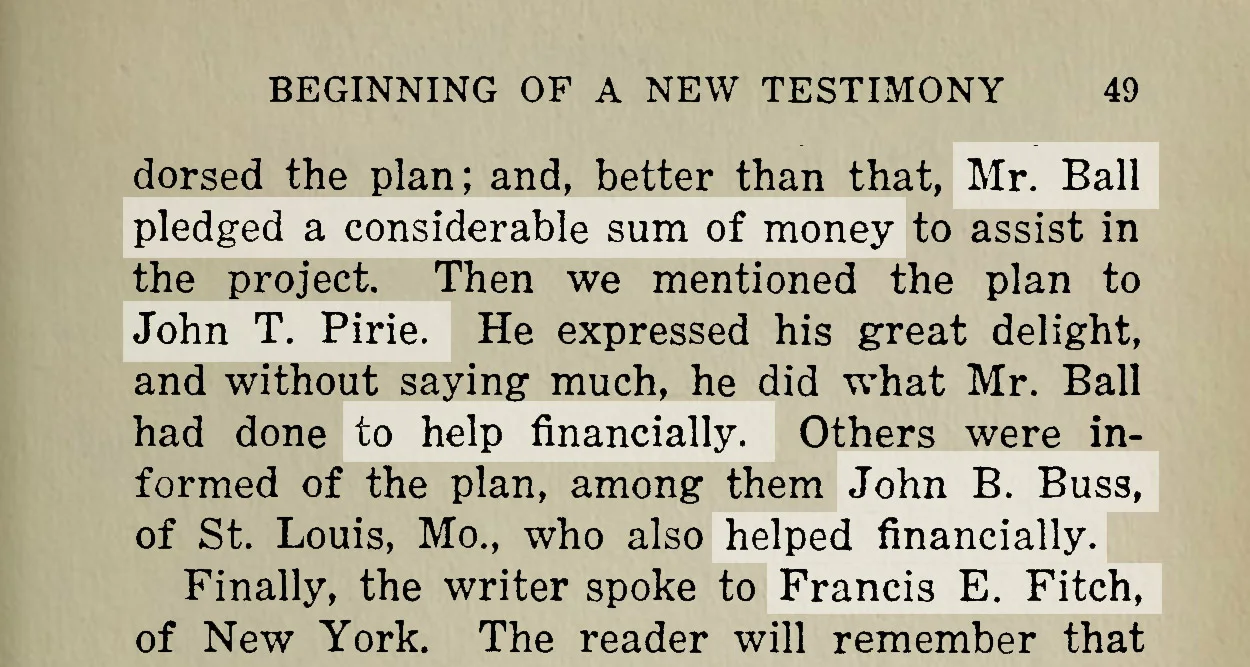
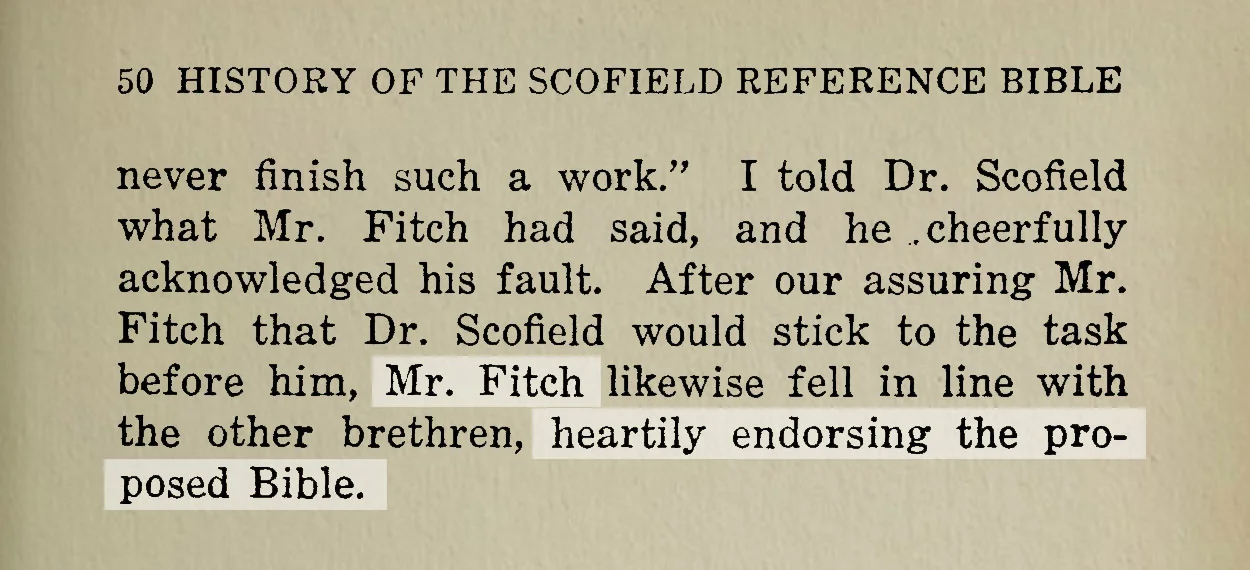
On pages 49–50, Arno C. Gaebelein provides a clear and unembellished list of those who financed the project, naming Alwyn Ball, John T. Pirie, John B. Buss, and Francis E. Fitch. The account is presented without speculation or intrigue—simply identifying known individuals within Scofield’s circle who contributed to the work. In doing so, Gaebelein frames the funding as arising from known, recognizable supporters of the project, not from any hidden or external source. Gaebelein’s historical book has been well-known and is readily available. Did Piper conduct primary research? If so, then why didn’t he reference these documented financiers? The uncomfortable answer is likely that the truth did not fit within the conspiratorial narrative many were wanting to craft.
(Click on any name below for a detailed biography)
Alwyn Ball, Jr: A New York businessman. He made his wealth primarily through real estate brokerage and general business investments with the Manhattan firm Frederick Southack & Alwyn Ball, Jr during the “skyscraper days” in New York City.
John T. Pirie: Associated with Carson Pirie Scott & Company, one of the largest and most successful department store chains based in Chicago, Illinois.
John B. Buss: St. Louis, Missouri area businessman. Owner of the nationally recognized John B. Buss Milling Company.
Francis E. Fitch: Associated with the Francis Emory Fitch Publishing/Exchange Printing Company, specializing in New York Stock Exchange reports, securities publications, and Wall Street financial printing.
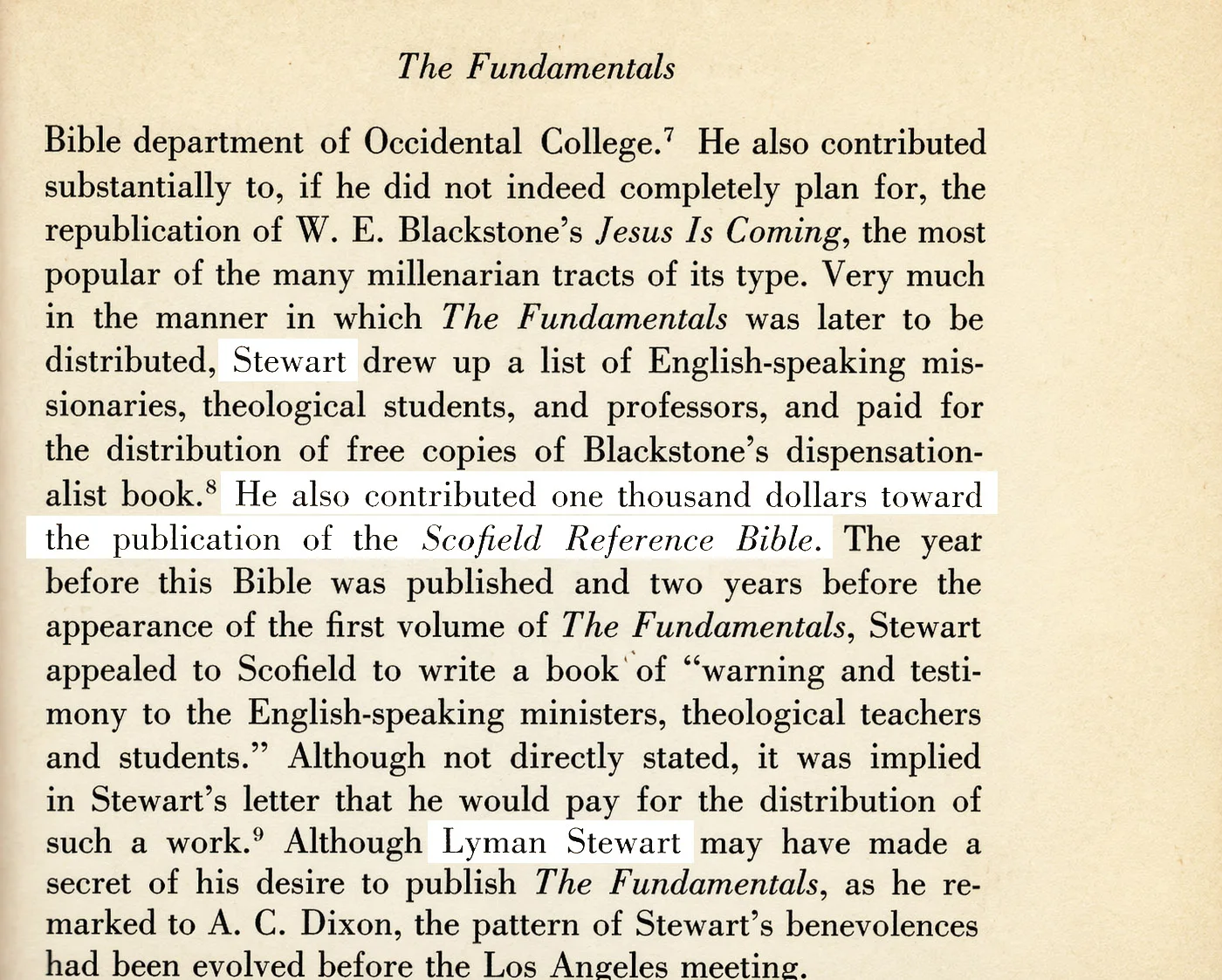
A fifth financial contributor (Lyman Stewart) is mentioned by Ernest R. Sandeen in The Roots of Fundamentalism: British and American Millenarianism, 1800–1930 (Univ. of Chicago Press, 1970, page 191). Stewart obtained his substantial wealth after being the co-founder of Union Oil Company of California (1890s). He provided the only known dollar amount donated by any of the contributors ($1,000 in 1908, which is the equivalent of $35,000 in 2026).
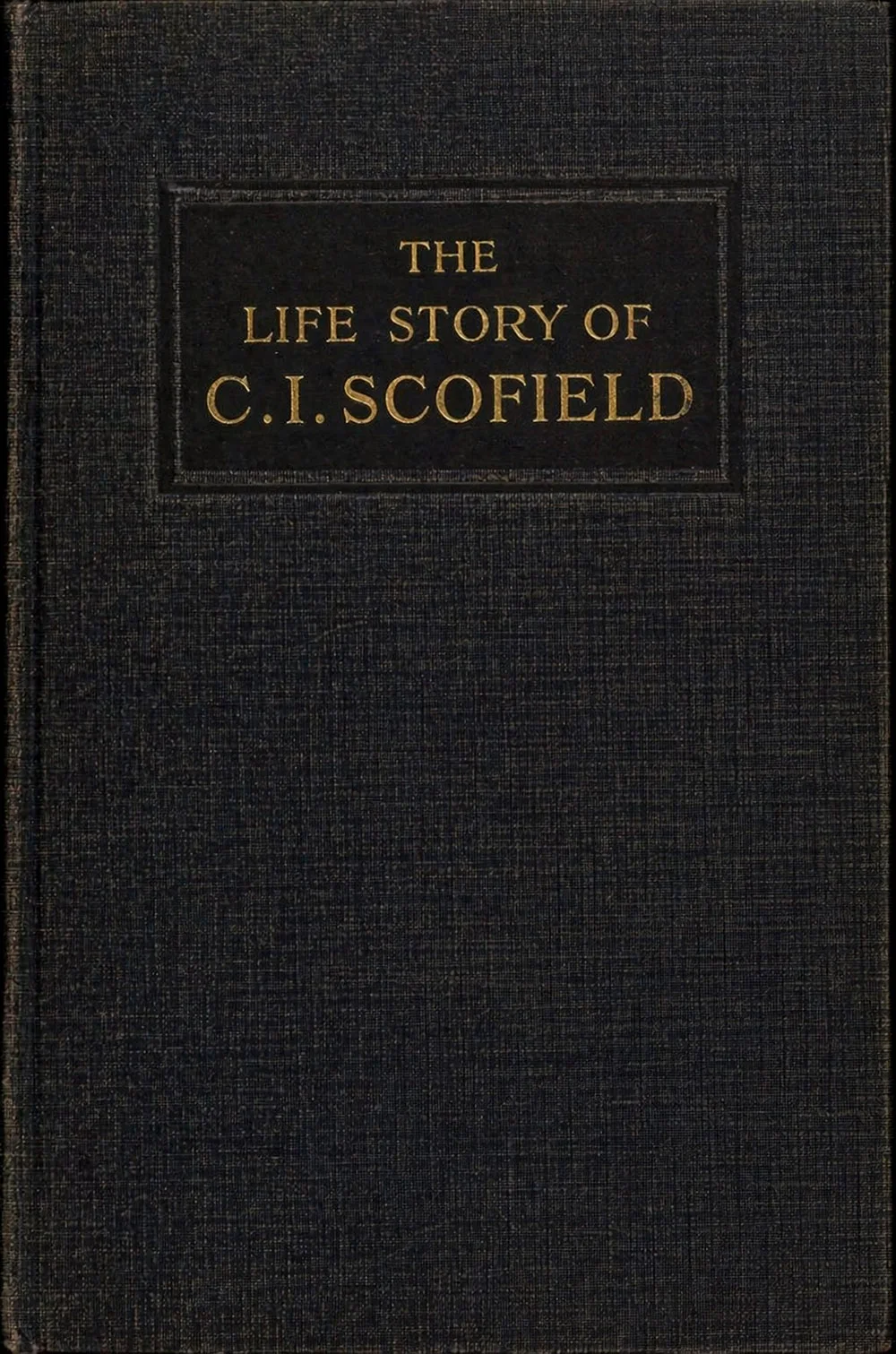
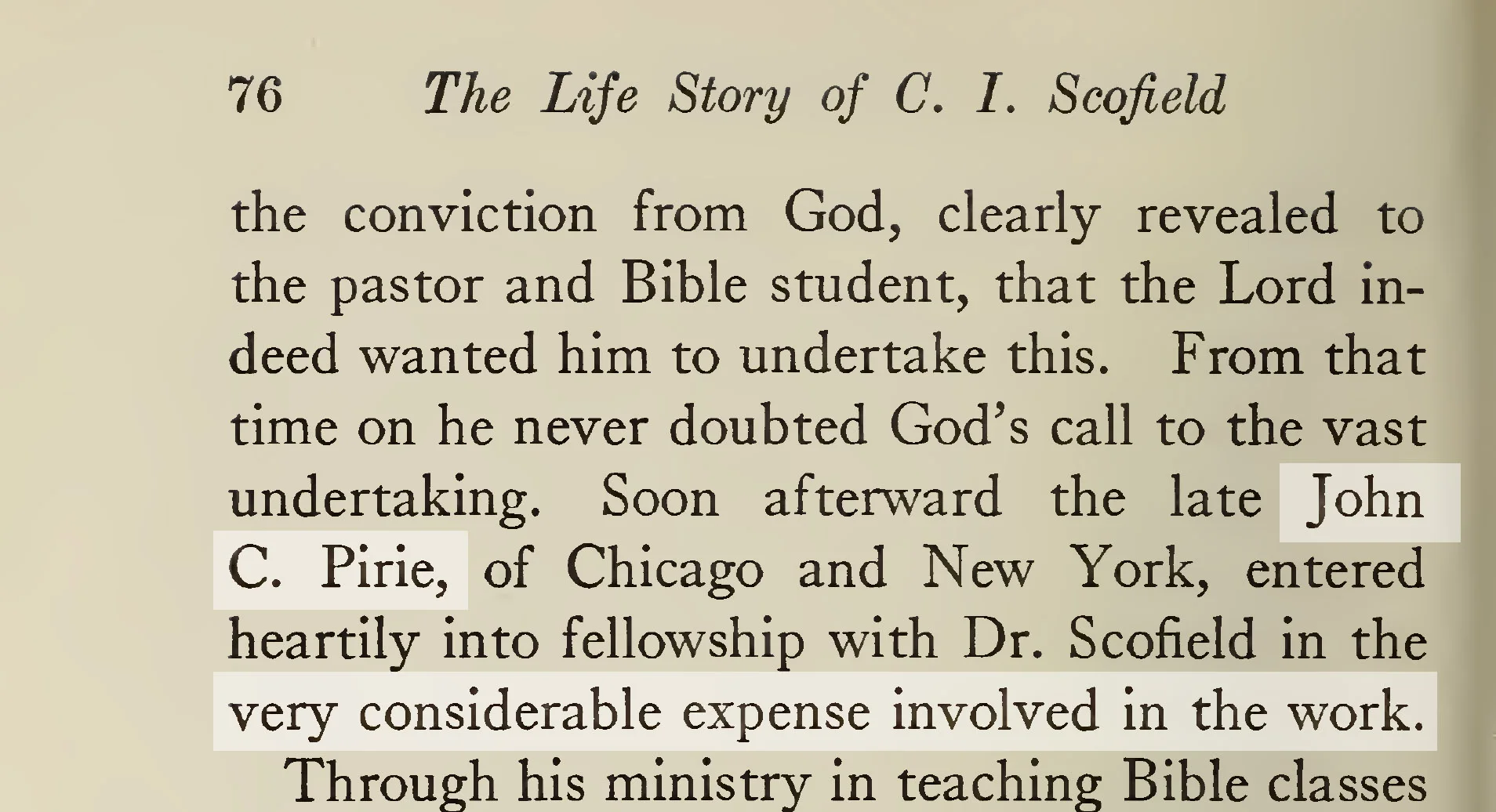
Charles G. Trumbull (1867–1941) was a prominent evangelical editor and writer. Moving within the same ministry groups as C. I. Scofield, Trumbull had direct access to Scofield and his associates, placing him in a position to record events from firsthand observation. His 1920 work, The Life Story of C. I. Scofield, is the earliest full-length biography of Scofield. Published shortly before Scofield’s death in 1921, it presents an insider account of his life, ministry, and the development of the Scofield Reference Bible.
Note: Trumbull incorrectly names one of the financial supporters as John C. Pirie, instead of John T. (Thomas) Pirie. This is likely a typo in the manuscript.
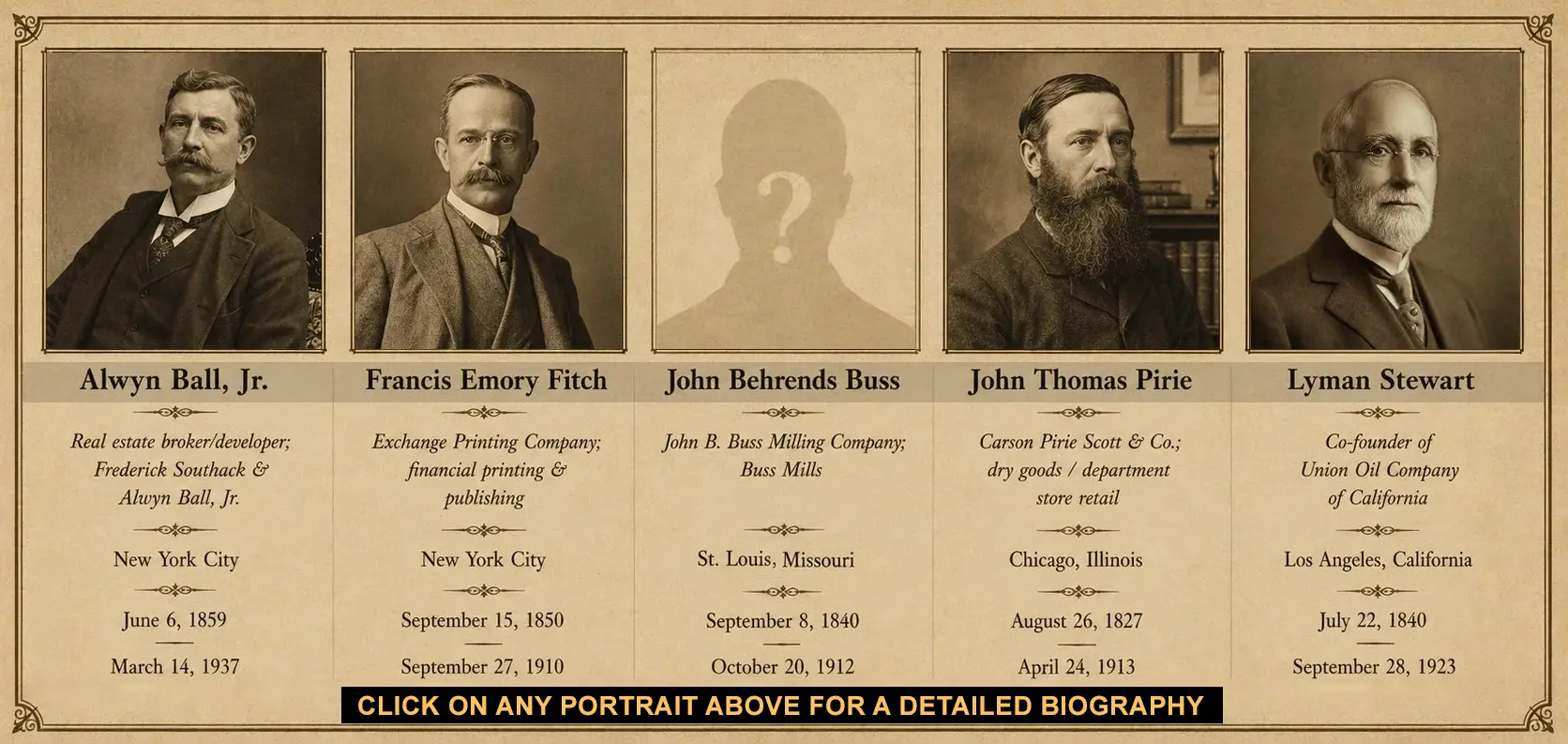
Who funded the Scofield Reference Bible? These five men. No mystery, no secrecy, no international involvement. Just a solid group of extremely successful (and some quite wealthy) businessmen who contributed to Scofield’s work and travel expenses.
(Click here for more information about the question: “Who funded the Scofield Reference Bible?“)
We now return to Michael Collins Piper, who literally “goes global” with his accusations:
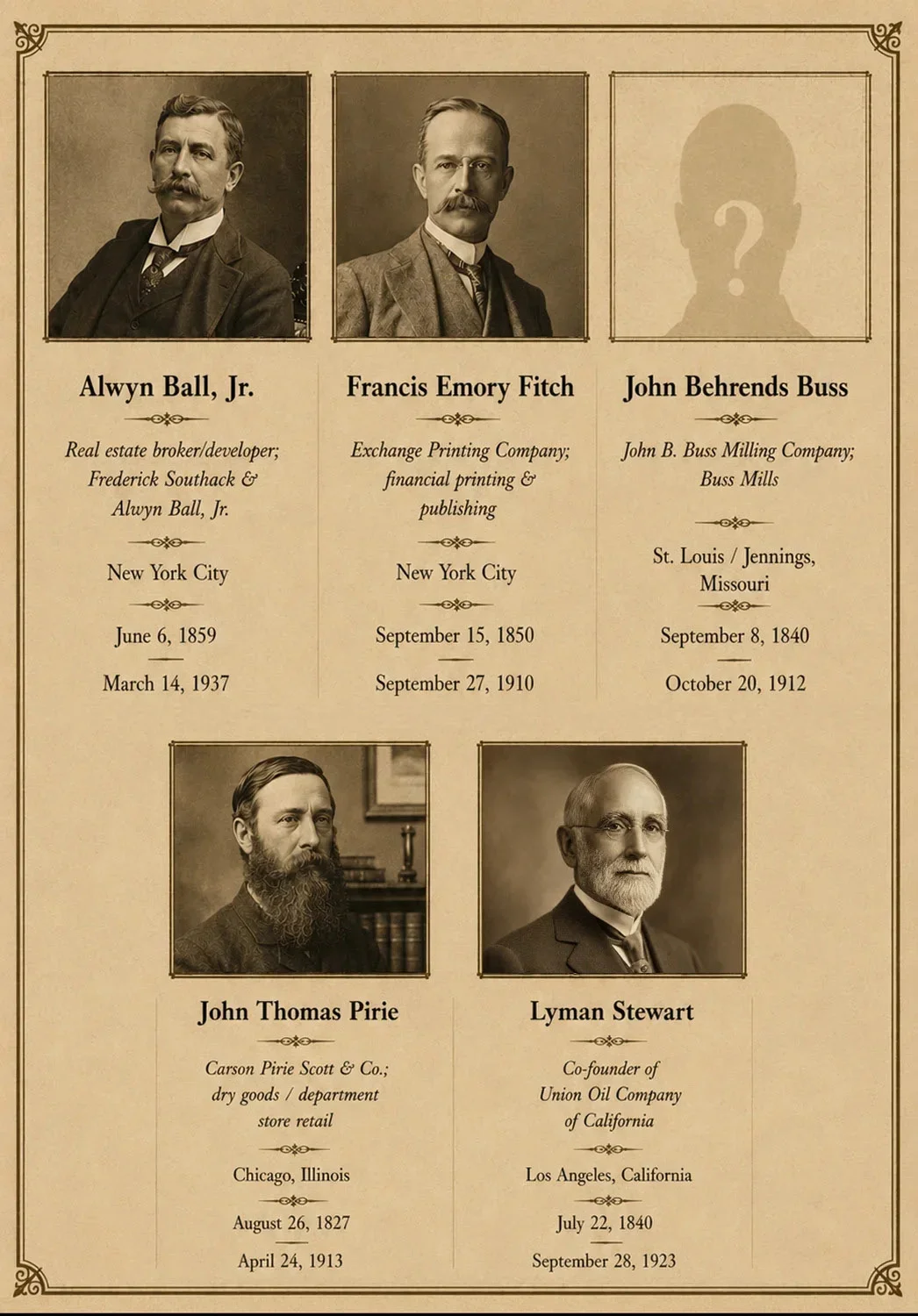
Who funded the Scofield Reference Bible? These five men. No mystery, no secrecy, no international involvement. Just a solid group of extremely successful (and some quite wealthy) businessmen who contributed to Scofield’s work and travel expenses.
(Click here for more information about the question of “Who funded the Scofield Reference Bible?“)
We now return to Michael Collins Piper, who literally “goes global” with his accusations:
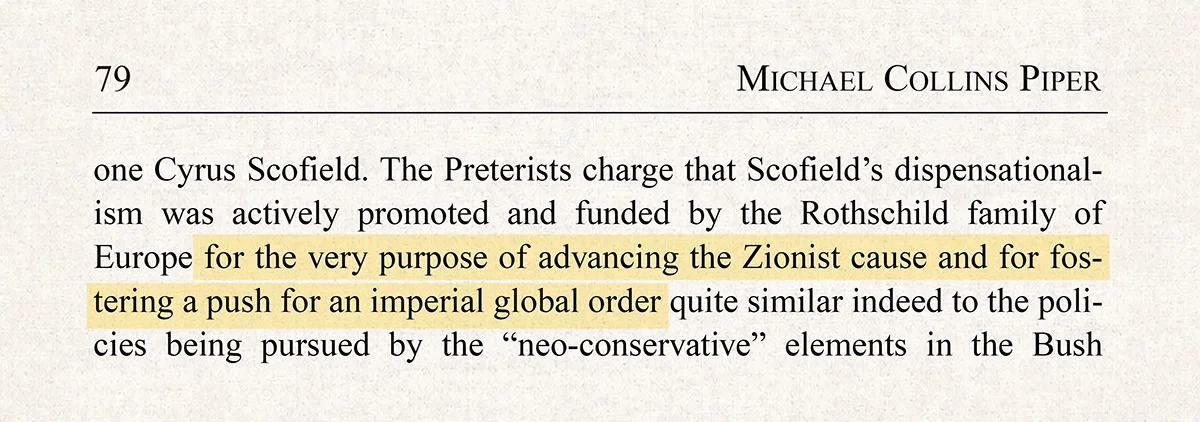
Notice, Piper says that Scofield was “promoted and funded…for the VERY PURPOSE…” In 1988, it was a single suspicion of one possible Jewish associate at The Lotos Club. But now, in 2004, Piper adds the Rothschilds, he adds promotion and funding, he touts a wider purpose and a global cause. It was only a matter of time before his inventions were picked up by others and pushed further. It happened one year later…
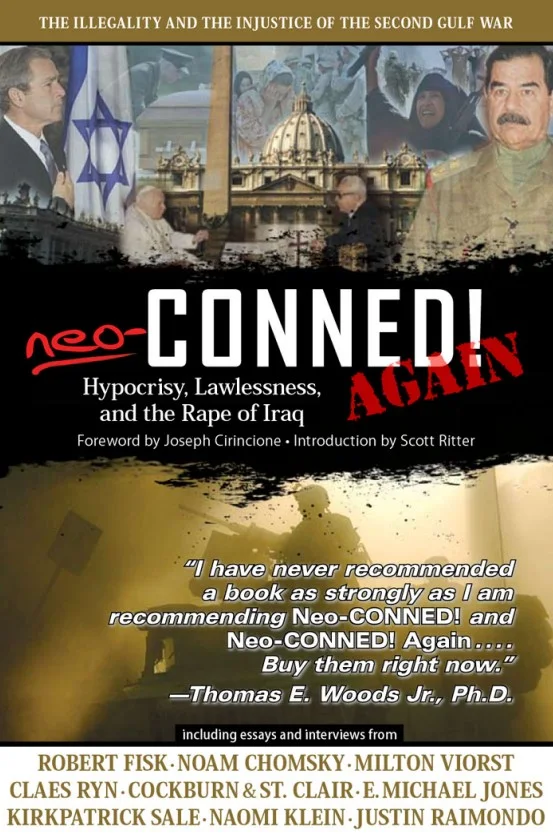
David W. Lutz is an American scholar and theologian whose writings often engage critically with Dispensationalism, examining its development and assumptions within the broader history of evangelical thought.
His chapter: Unjust War Theory: Christian Zionism and the Road to Jerusalem is nestled within the pages of the book Neo-Conned Again: Hypocrisy, Lawlessness, and the Rape of Iraq (Light in the Darkness Publications, 2005).
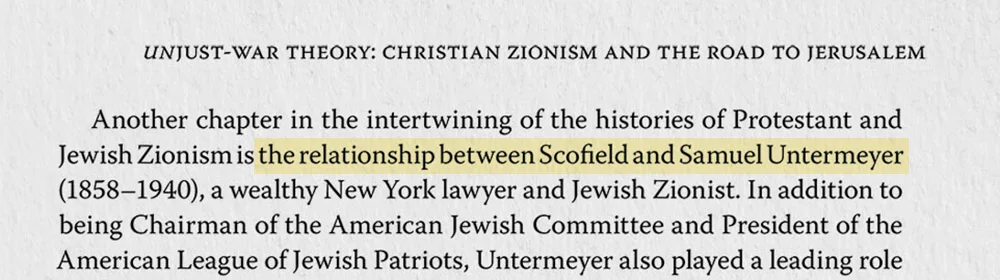
Lutz begins slowly on page 147, claiming that there was a “relationship” between Scofield and Untermyer. This had been insinuated by Canfield, expanded by conspiracy theorists.

Lutz then makes a huge leap, stating that Untermyer “used Scofield.” To make this predator-prey scenario more likely, he minimizes Scofield, claiming he had “no formal training in theology” – completely ignoring the fact that Scofield was already a published theological author and sought-after bible conference speaker. And what was this master plan? To “inject Zionist ideas into American Protestantism” just as stated by Carlson a few years earlier. The bigger master plan? To ultimately create sympathy for a future Jewish state.

Lutz borrows heavily from “The Unified Conspiracy Theory” and Piper here, adding that Untermyer introduced wealthy and influential Zionists to Scofield. He repeats Piper’s claim of promotion and funding, nearly word for word.

We applaud Lutz that he is honest enough to admit he is borrowing from Piper. Nothing completely new here, just recycled and amplified in small but important ways. But now the false information will make a jump from print to digital on a conspiracy theory blog site (www.whale.to). On Tuesday, March 10, 2009, a writer identified as Robert Singer posted a rant filled with accusations in a jumbled montage of Jewish conspiracy theories. His article is titled The Scofield Bible, Oxford Publishing and the House of Rothschild.
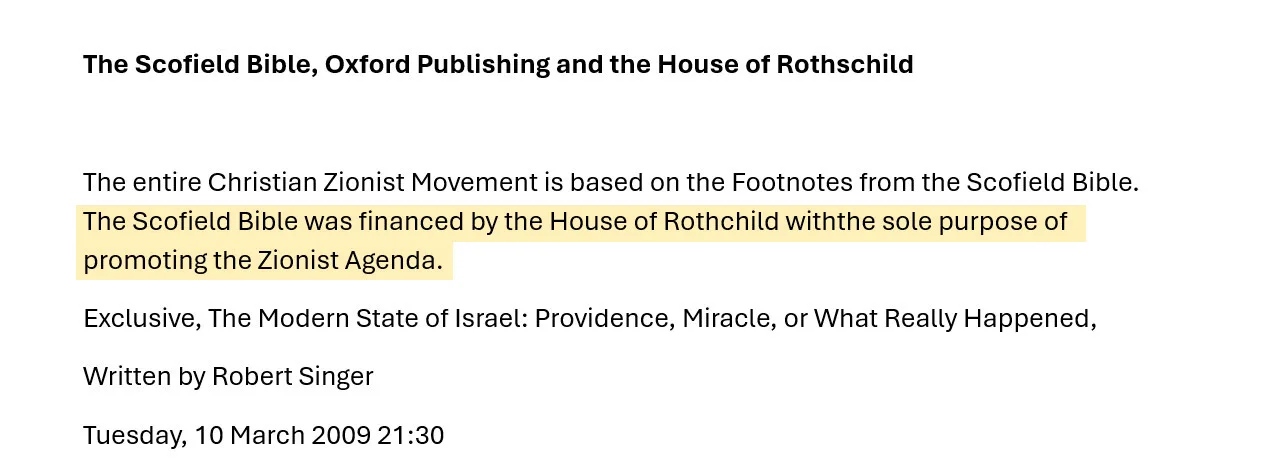
Singer wastes no time hurling accusations against Scofield, even in the summary leading in to the article. This opening salvo is largely a borrow from Piper who was apparently the first to claim that the Rothschilds financed Scofield. Piper used the phrase “very purpose” and here Singer changes it to “sole purpose.”
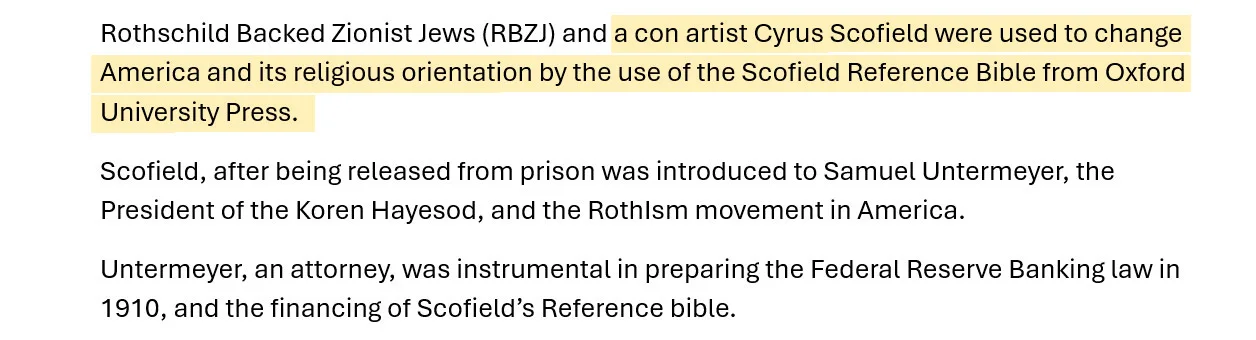
The meandering article begins with a long list of definitions before diving in to various Zionist conspiracies. Eventually Singer brings it back to Scofield in a less than flattering light. According to Singer, Scofield was a “con artist.” That seems harsh, even for an anti-Dispensational rant, but there is a reason. Singer is referring to the accusations of forgery against C.I. Scofield from the late 1870s, before Scofield became a Christian. Then he borrows from Lutz saying that Scofield was “used” to change America.
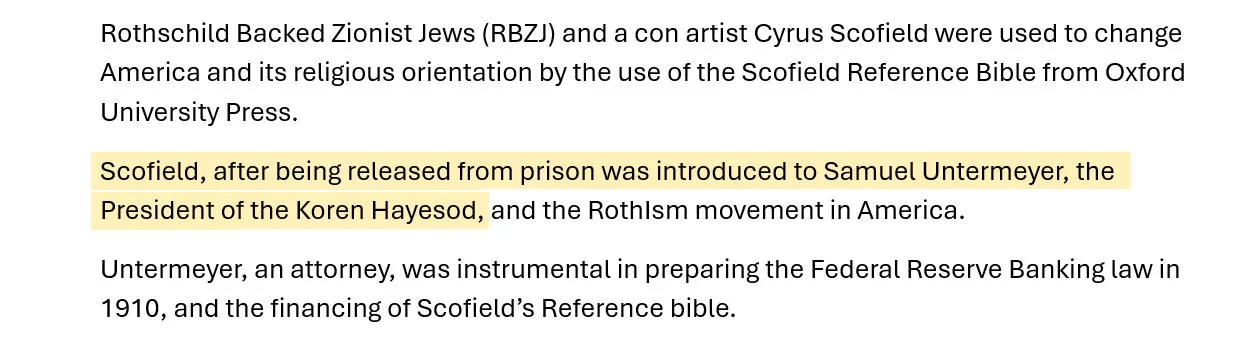
He announces that Scofield had been sent to “prison.” But is that true? In his biography, Canfield had mentioned that Scofield might have served prison time in Canada, but then acknowledged that Canadian authorities had “no record” of such imprisonment. So the simplest answer is, no, Scofield did not ever go to prison, but he did go to a local city jail in Milwaukee before being sent to a city jail in St. Louis. He had been accused of forging two different signatures on two promissory notes. He likely was guilty, but both charges were eventually dropped. Scofield also had an ongoing problem with alcohol that was getting out of control. But it was during this time of spiraling into disaster that he met Henry Clay McPheeters, a physician and Presbyterian minister, who led him to a dramatic faith in Christ.
But then, notice what Singer says next: “after being released from prison (Scofield) was introduced to Samuel Untermeyer, the President of the Koren Hayesod…” We need to examine the actual timeline. Scofield spent time in jail in 1879. The first time he might have met Untermyer (there is no evidence that they ever did meet) would have been 1900 (The Lotos Club). Between 1879 and 1900 is at least 21 years, yet Singer makes it sound as if Scofield stumbled out of a cell and into the arms of a Zionist.
But his timeline compression gets worse. Singer goes on to say “…Samuel Untermeyer, the President of the Koren Hayesod…” Untermyer did not become the President of Koren (Keren) Hayesod until 1921. Another gap of over 20 years! That Jewish group did not even get chartered until 1921, but Singer claims that Untermyer was already a Zionist organization president when he (might have) first met Scofield. In that one sentence, Singer compresses at least 40 years of history into a single thought. An uncritical or unsuspecting reader would have been led down a very misleading trail.
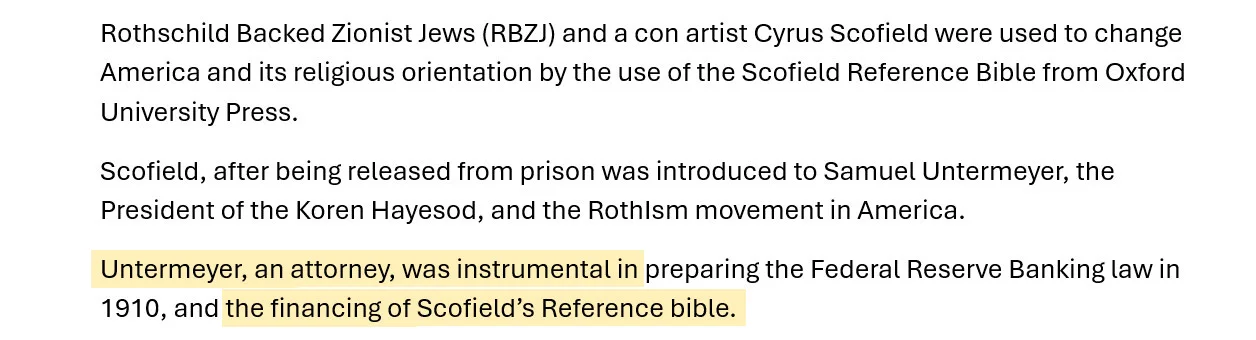
Singer repeats the allegation that Scofield received funding from Zionists. But remember, we have primary source material from the period which already names his five financial backers. None of them were Jews, none of them had connections to the Rothschild family. All of them were financially successful and perfectly capable of helping Scofield with his financial needs, and the costs of publishing.
Just over a year after his 2009 claim that C. I. Scofield had been supported by Samuel Untermyer, Singer returned to the theme in a 2010 piece, The War to End All Wars — Providence, Pointless Tragedy or What Really Happened.This later article made a new claim regarding a new (supposed) source: Benjamin Harrison Freedman (1890–1984). Freedman was an American businessman and public speaker who became known for his controversial lectures and writings against Zionism, international politics, and U.S. foreign policy.
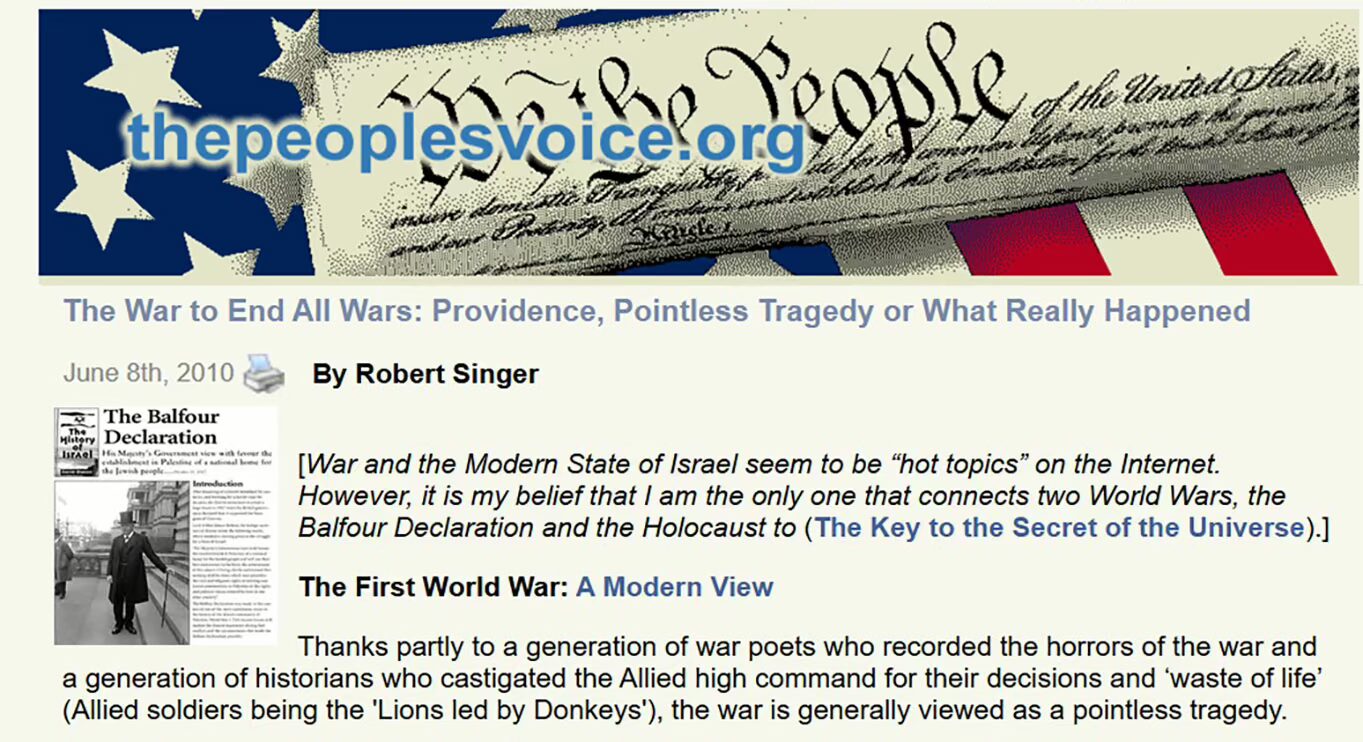

Notice the purposeful word order here. To the average reader, Robert Singer appears to be claiming that Benjamin Freedman connected Untermeyer and Scofield. Immediately after making the claim of a connection, Singer cites Benjamin Freedman, and his message “Zionism – The Hidden Tyranny.” If you will click the name of the article, it will open a direct link to the text of Freedman’s message. You will search that article in vain for any mention of Scofield, or even the Bible. Zero. No connections. He mentions Samuel Untermeyer repeatedly, but nothing even resembling a connection to Scofield. This (apparently deliberate) false insinuation has been repeated on various forums and blogs online.
But Singer might have been encouraged to make this (false) connection by another earlier online article entitled “Cyrus Scofield — Who Was He?” The earliest date we could find for this SweetLiberty.org page was March 3, 2001. Notice the wording near the end of the post:

Two lines here are strangely familiar. The opening line “How Does Samuel Untermeyer Fit Into the Scheme?” was copied directly by Robert Singer in his 2010 article above. And the next phrase “taken under the wing of Samuel Untermeyer” was borrowed from The Unified Conspiracy Theory, word for word. But then notice that Benjamin Freedman’s article is mentioned immediately after. One could understand how a later person (Singer?) might think that the quote above came from that article mentioned immediately below. That is how citations typically function. This may have been unintentional, but for suspicious seekers looking for connections, this may have been enough.
And due to such insinuations, the internet is now littered with supposed connections between Scofield and Untermeyer per Benjamin Freedman, a connection he never claimed. Look at this 2008 post in Google Groups, directly citing the SweetLiberty.org page and notice how Benjamin Freedman is cited for a connection that he never once made:
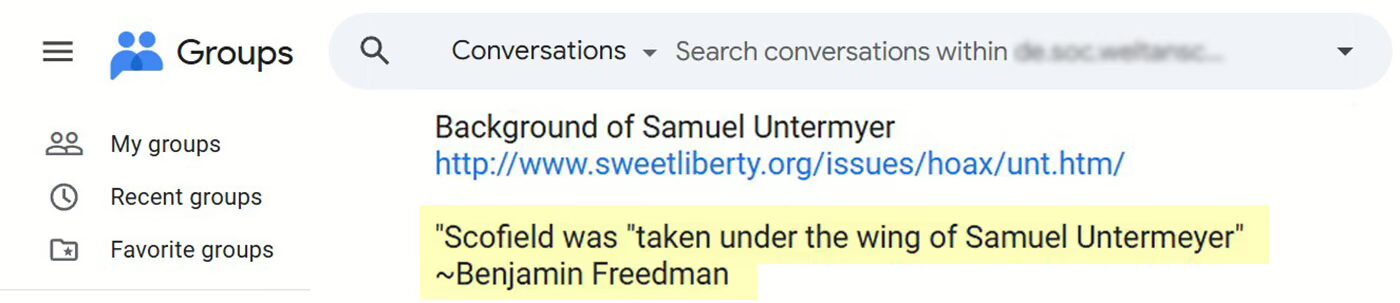
Let’s be absolutely clear…Freedman was certainly not fond of Samuel Untermeyer, but as far as our research has been able to determine, he never even once mentioned Scofield in any speech, article, or pamphlet. Freedman never attributed a Bible to Untermeyer’s influence, and he never claimed that Untermeyer took Scofield “under his wing” (that line comes from the The Unified Conspiracy Theory). Just another exaggerated claim by others… a claim completely fabricated.
The two phases of Assumption and Exaggeration are complete. A simple allegation by Canfield in 1988 has been inflated into a grand scheme. All that is still needed is steady duplication until the narrative reaches critical mass.
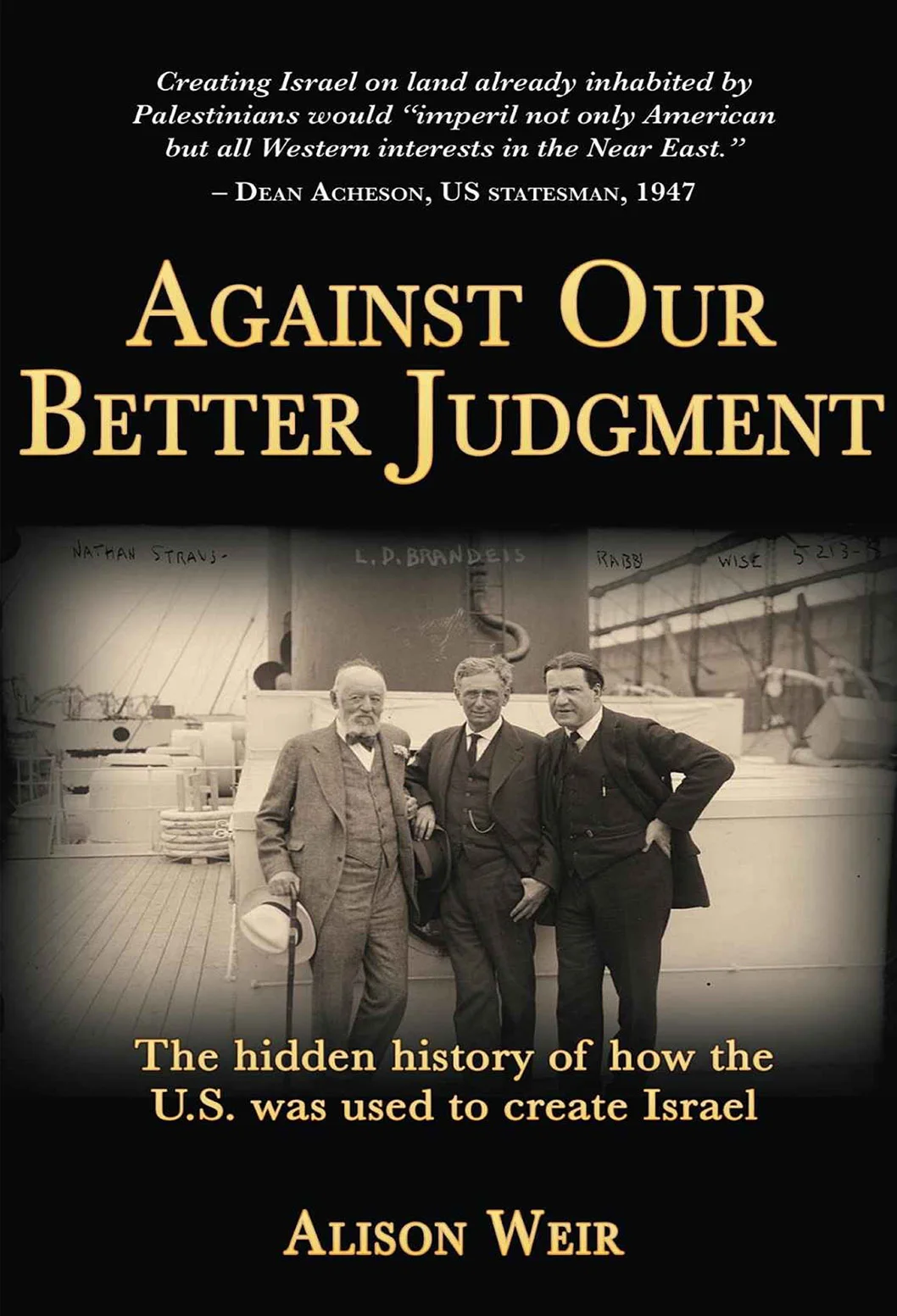
In 2014, Alison Weir released Against Our Better Judgment (independently published through Amazon). Her work argues that U.S. support for Israel was shaped less by broad public interest and more by a small network of influential advocates. It traces how media, political, and financial pressures helped shape American foreign policy in the Middle East, including Dispensationalism and Scofield.
She cites and parrots Canfield and Lutz heavily, completing the process of: assumption, exaggeration, and repetition.
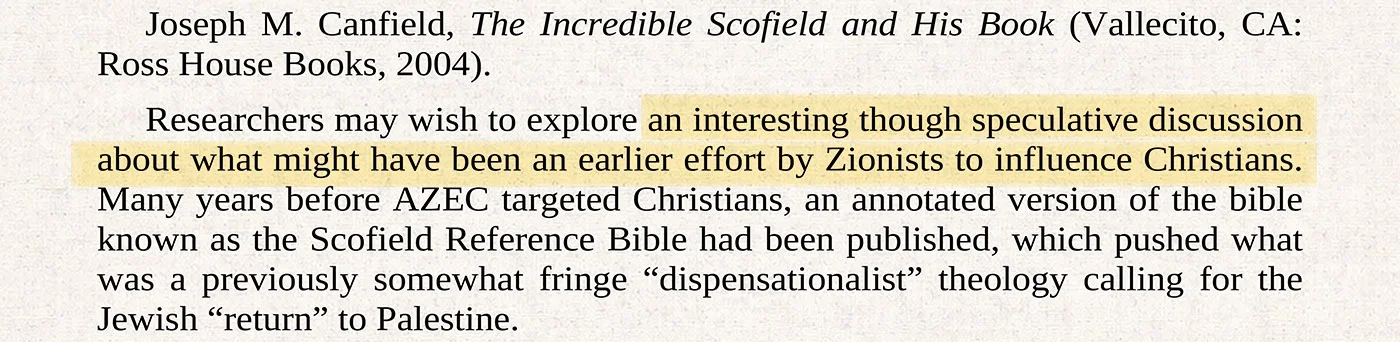
One can appreciate her professionalism as an investigative journalist. She openly cites her sources, and admits the “speculative discussion about what might have been…” Instead of claiming facts, she reminds her readers of the fragile nature of the case.
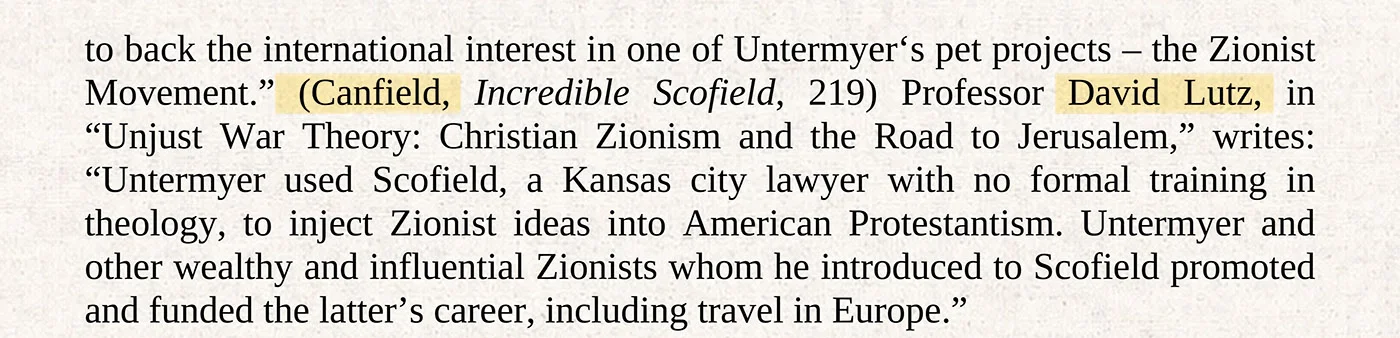
She cites the chain we have laid out (minus Piper). Weir traces this speculation back to Canfield (1988) and then forward to Lutz (2005). Unfortunately, since the viral breakout in 2025, few would now believe that it all only goes back to a suspicion 80 years after Scofield. A “what if” seed had long germinated in the fertile soil of imaginative speculation.

Why Did Oxford University Press Publish the Scofield Reference Bible?
We have encountered this organization before… the Oxford University Press, which printed the Scofield Reference Bible in 1909. In a sense, Weir brings up an unspoken question: “Why would a world-class printer, based out of Europe, print bibles for this preacher from America?” At face value, it might seem a valid inquiry, but like a gold-painted rock, one only has to scratch a little to see the truth underneath it all.
Piper and Lutz incorporated the Rothschilds into the pipeline, asserting that only a connection to this all-powerful dynasty could answer the question above. Unfortunately for them, once again we have primary source material that answers the question better, and about 60 years earlier. Arno Gaebelein, who witnessed many of these events firsthand, described what happened in his book.
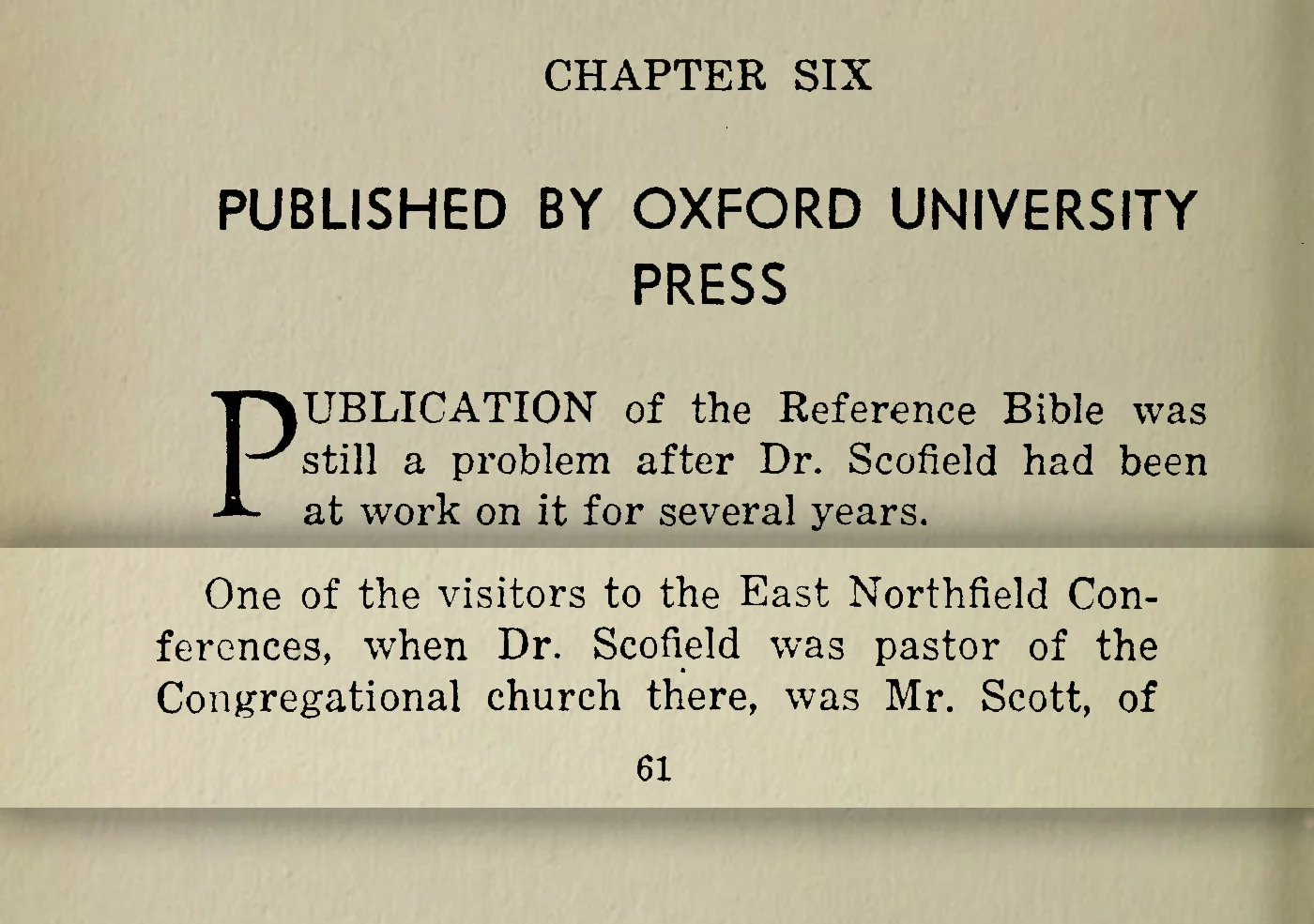
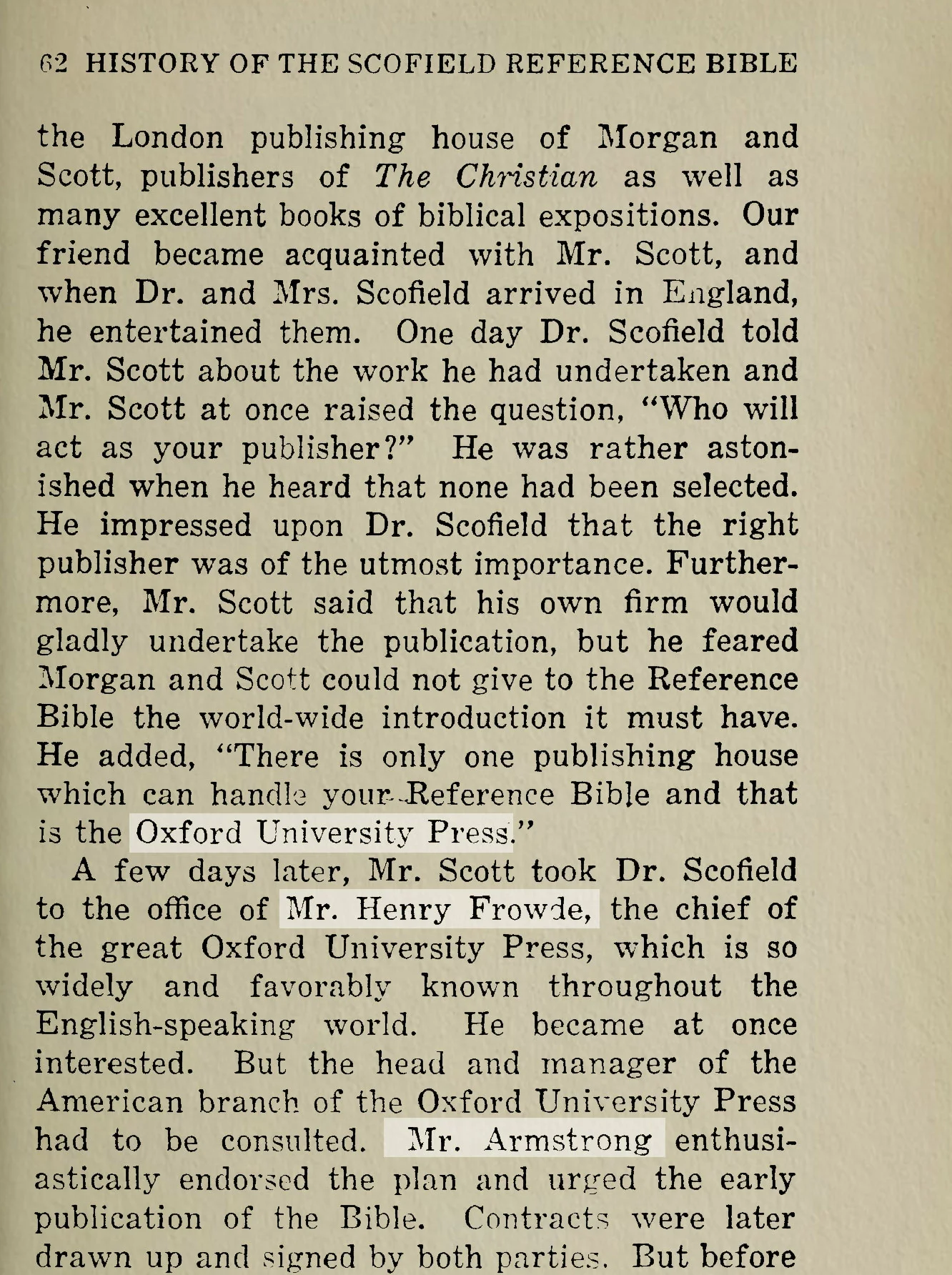
He relates that “Publication…was still a problem…for years.” Nothing sinister, nothing schemed. Just a normal business process of talking to manufacturers, gathering information, disappointments, making connections, and negotiating contracts. Gaebelein witnessed the process of Scofield trying to find a printer.
“But it was the prestigious Oxford University Press!” many might protest. “What are the odds?”
To be honest… the odds are really good. At the beginning of the 20th century, only a few printers in the world could accommodate manufacturing a large study bible in significant quantities. And out of that handful of potential companies, only TWO in England were officially authorized to print bibles using the King James Version (the original Scofield Reference Bible was KJV). The following article authored by Harry How (Strand Magazine, 1894) provides the details:
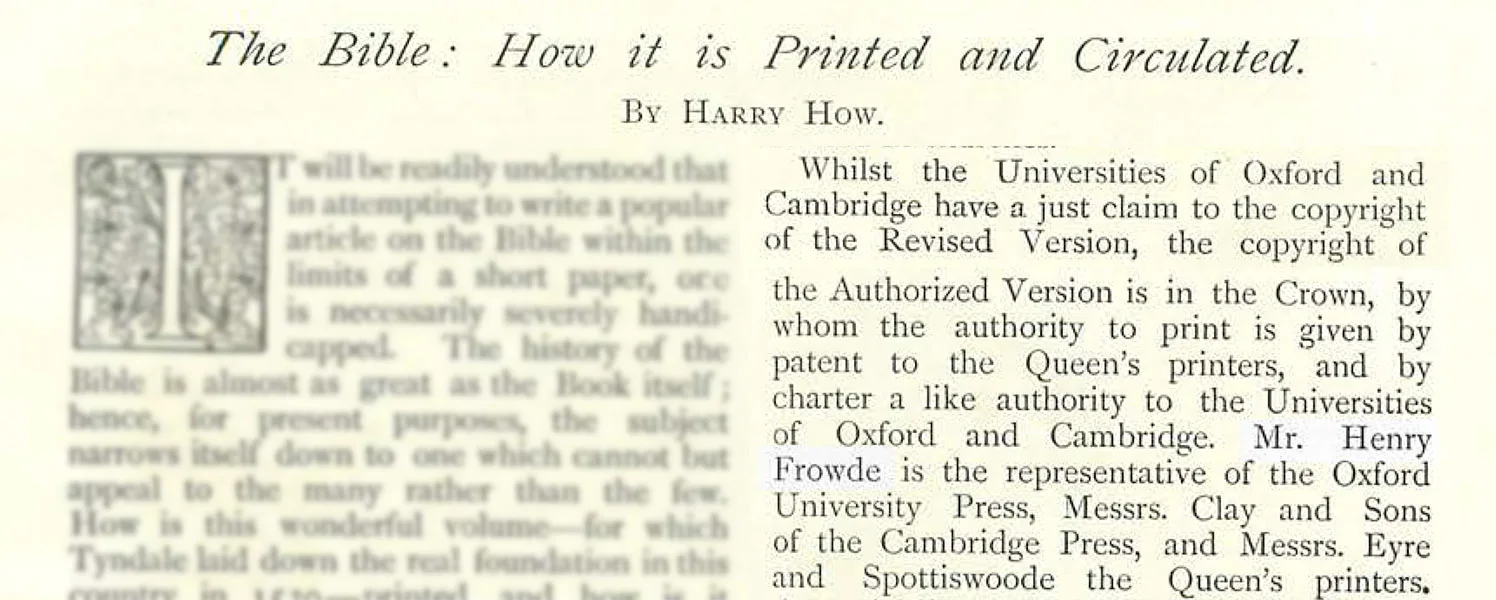
Notice, the British Crown only authorized two printers for King James Bibles: Oxford Press and Cambridge Press. Notice also that Mr. Henry Frowde (who was referenced by Gaebelein) is mentioned here as well. No Zionists, no Rothschilds. Just familiar names and facts. Printing bibles was a common and growing business at Oxford Press from the 19th century into the early 20th century. We have documentation to verify (A Brief Account of the University Press at Oxford, Madan, 1908):
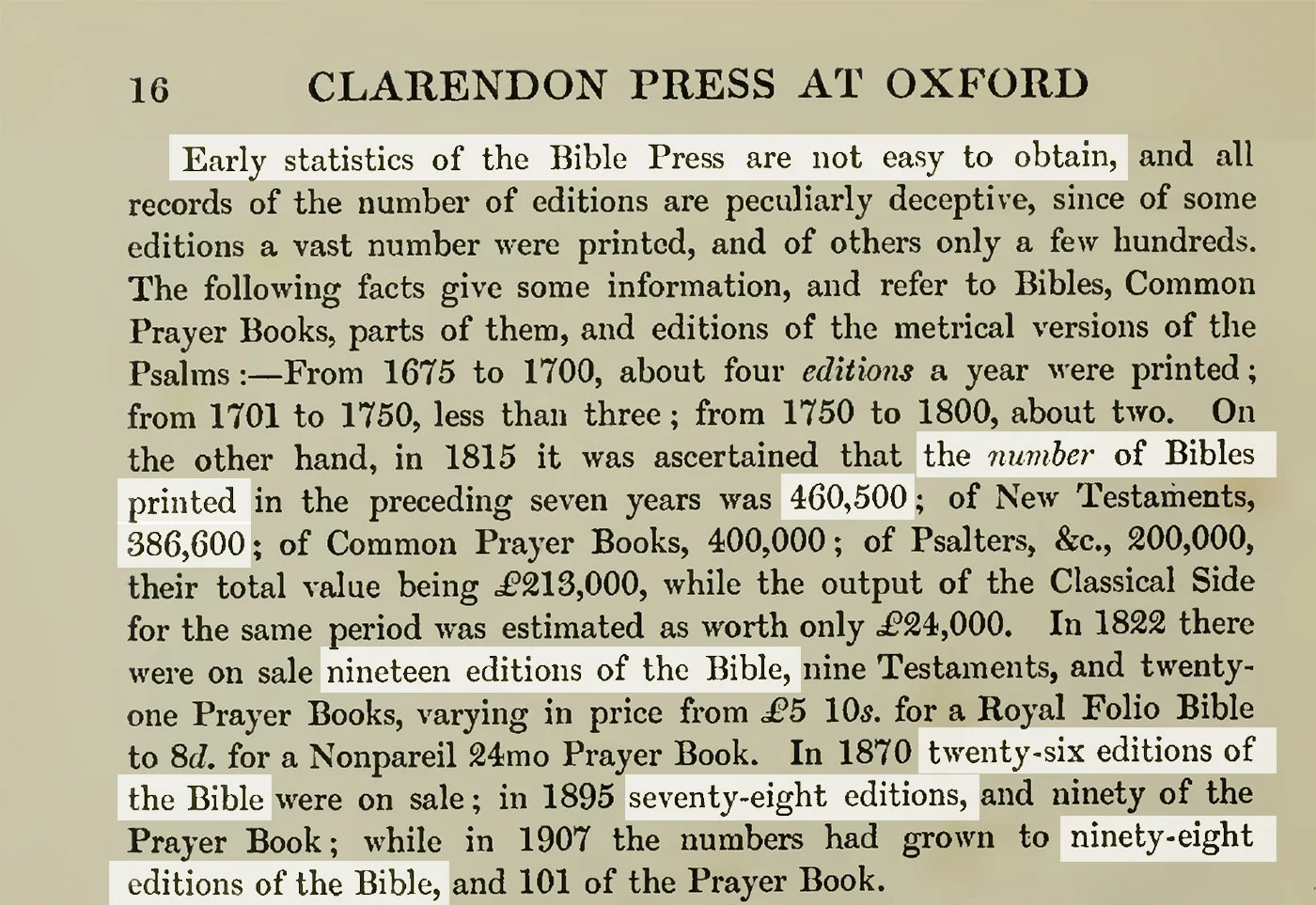
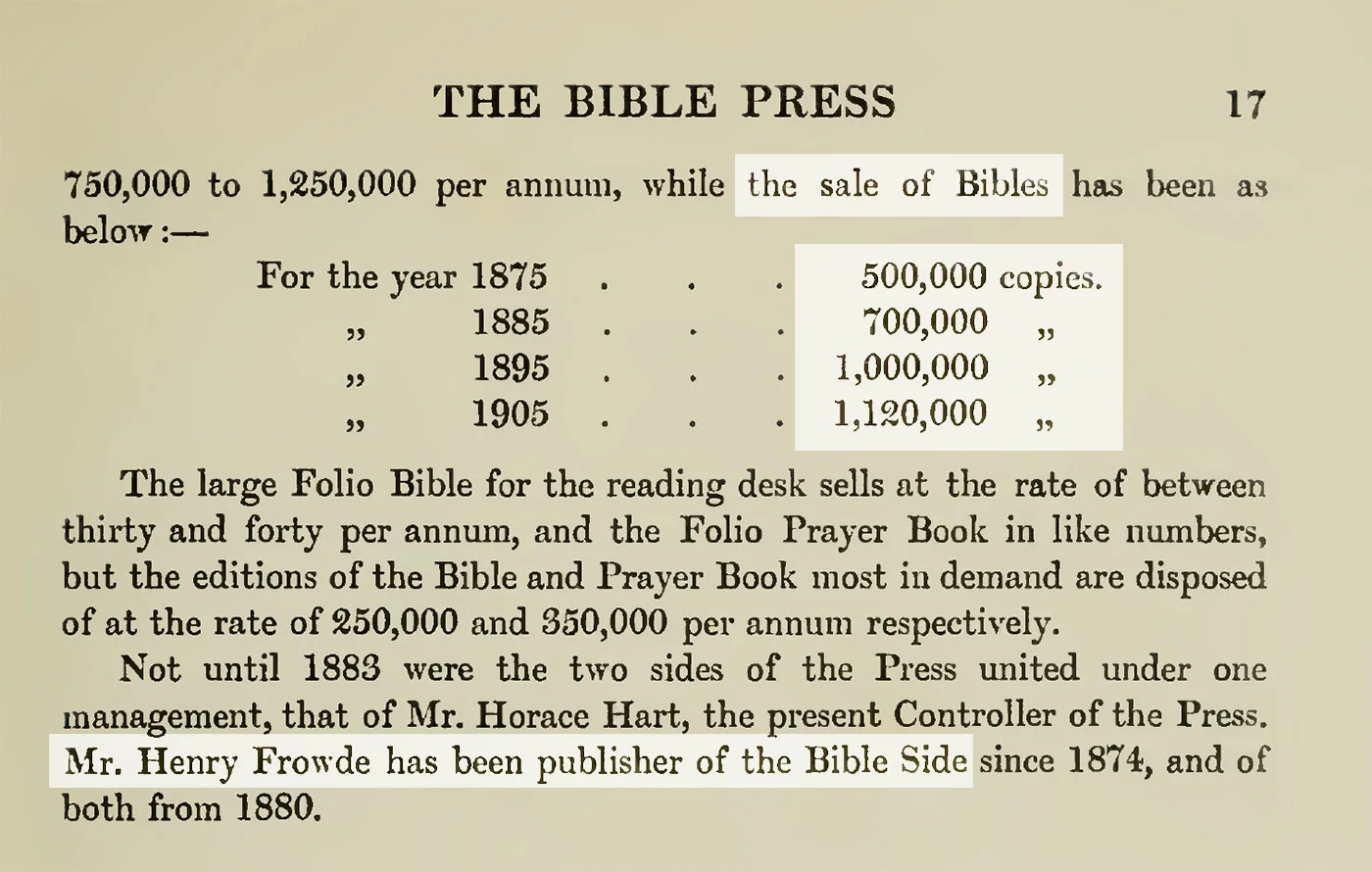
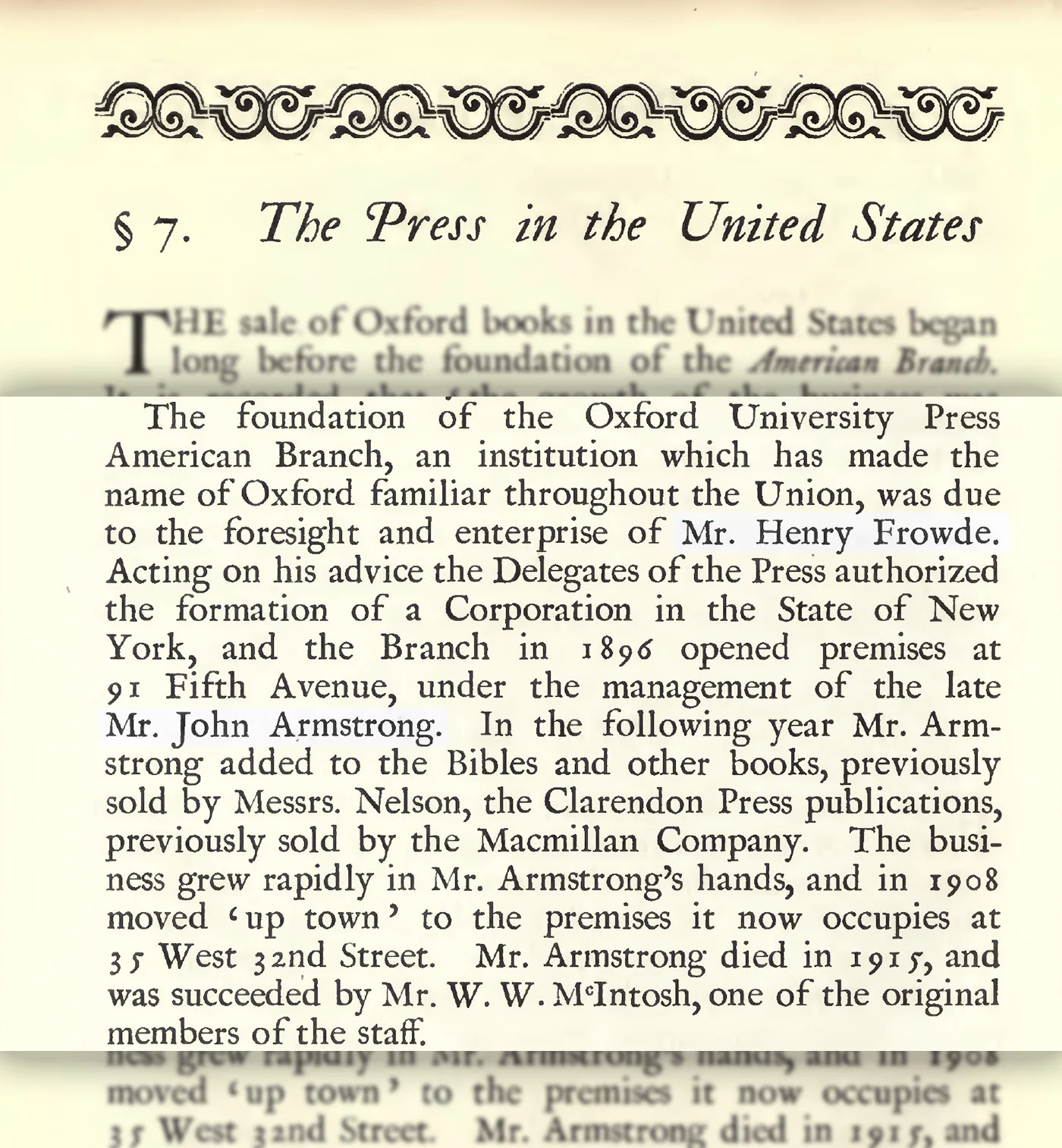
Oxford Press opened up an American office under Henry Frowde’s leadership around 1896. We get more details about Frowde and John Armstrong (both referenced by Gaebelein) from the 3-volume set The History of Oxford University Press, Eliot, 2013-2017.
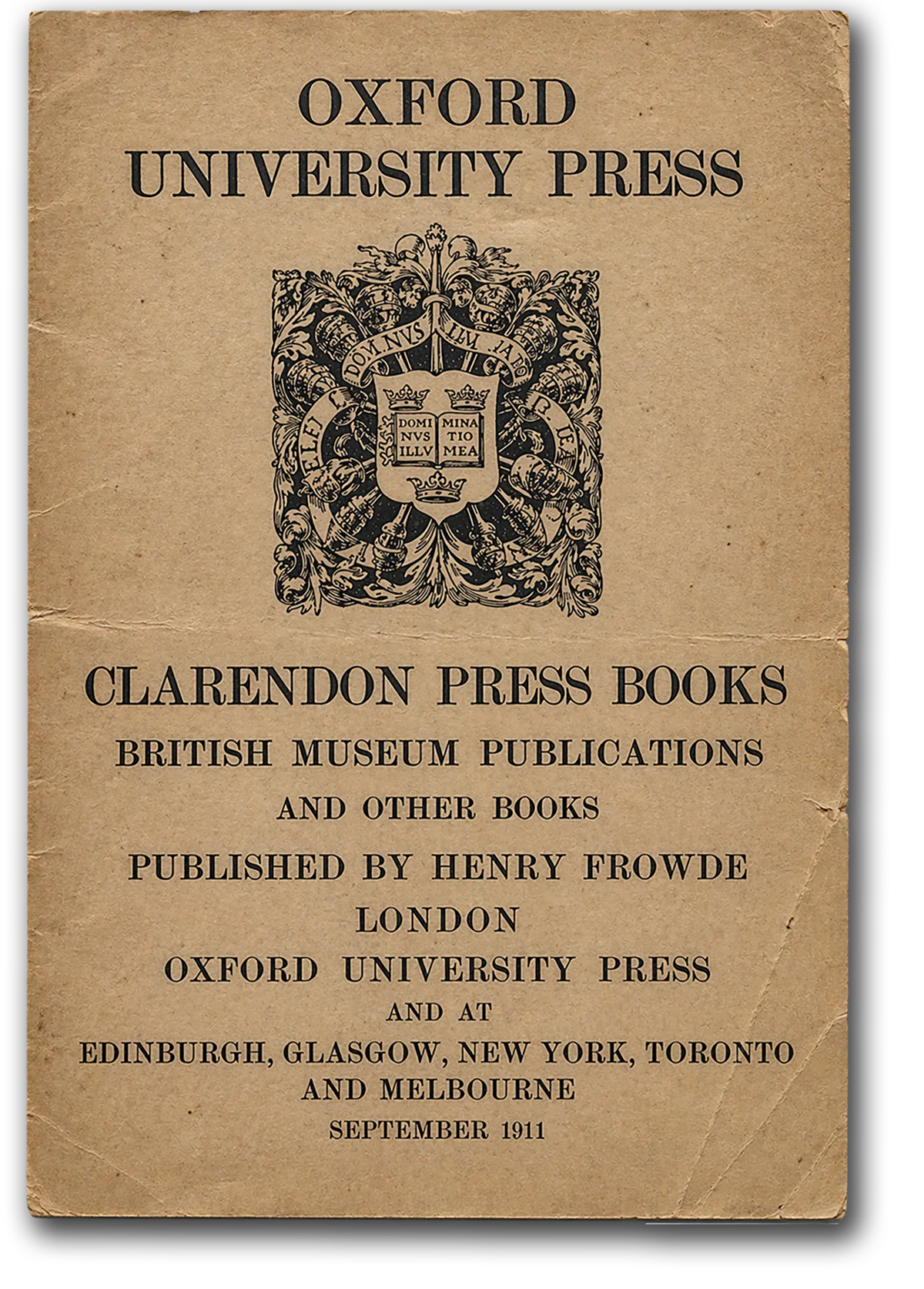
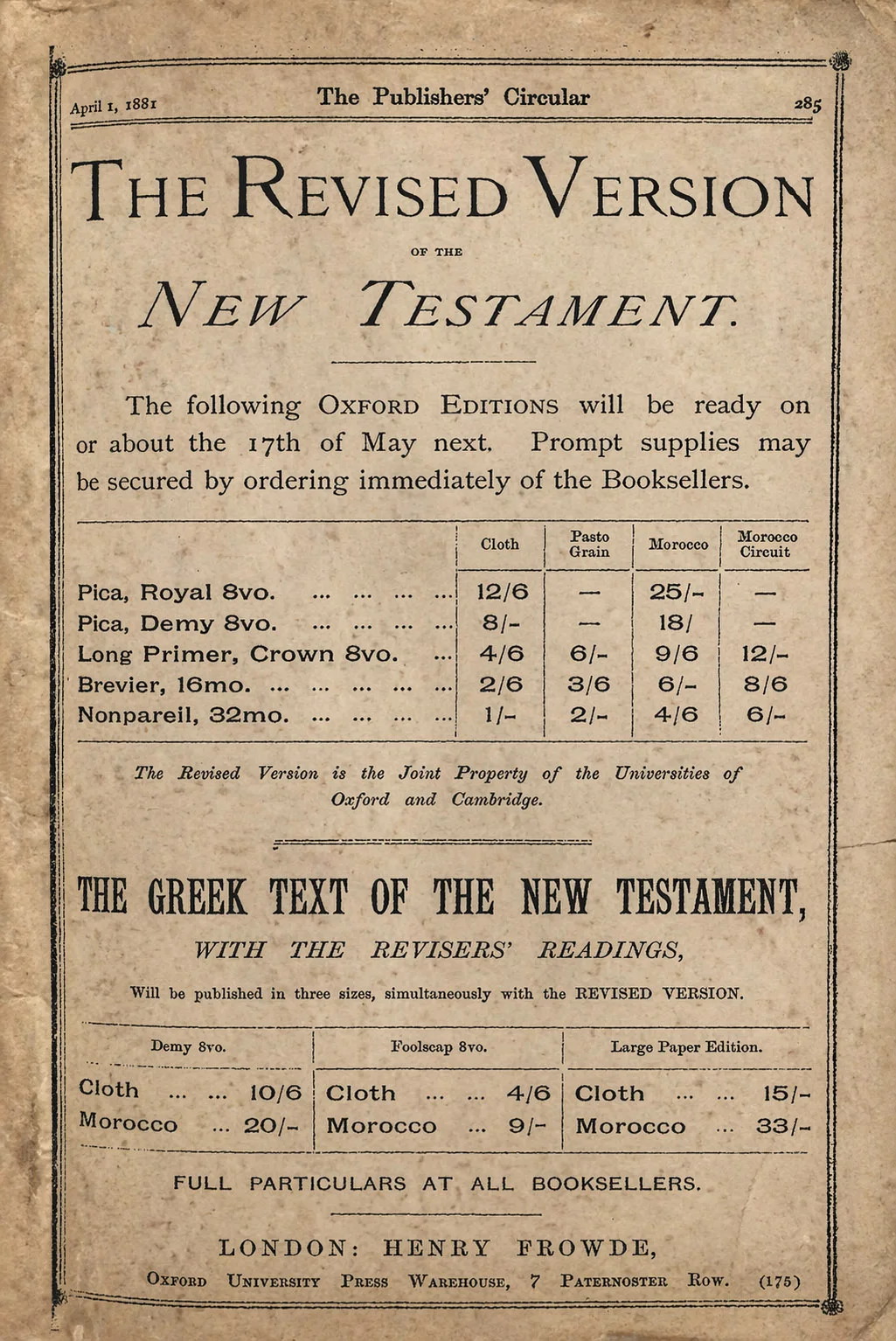
Located below are two more examples of Oxford Press materials mentioning Henry Frowde, the first from 1911 (two years after the publication of the Scofield Reference Bible) and the latter from 1881. Frowde had a long and celebrated career at Oxford (1874-1917).
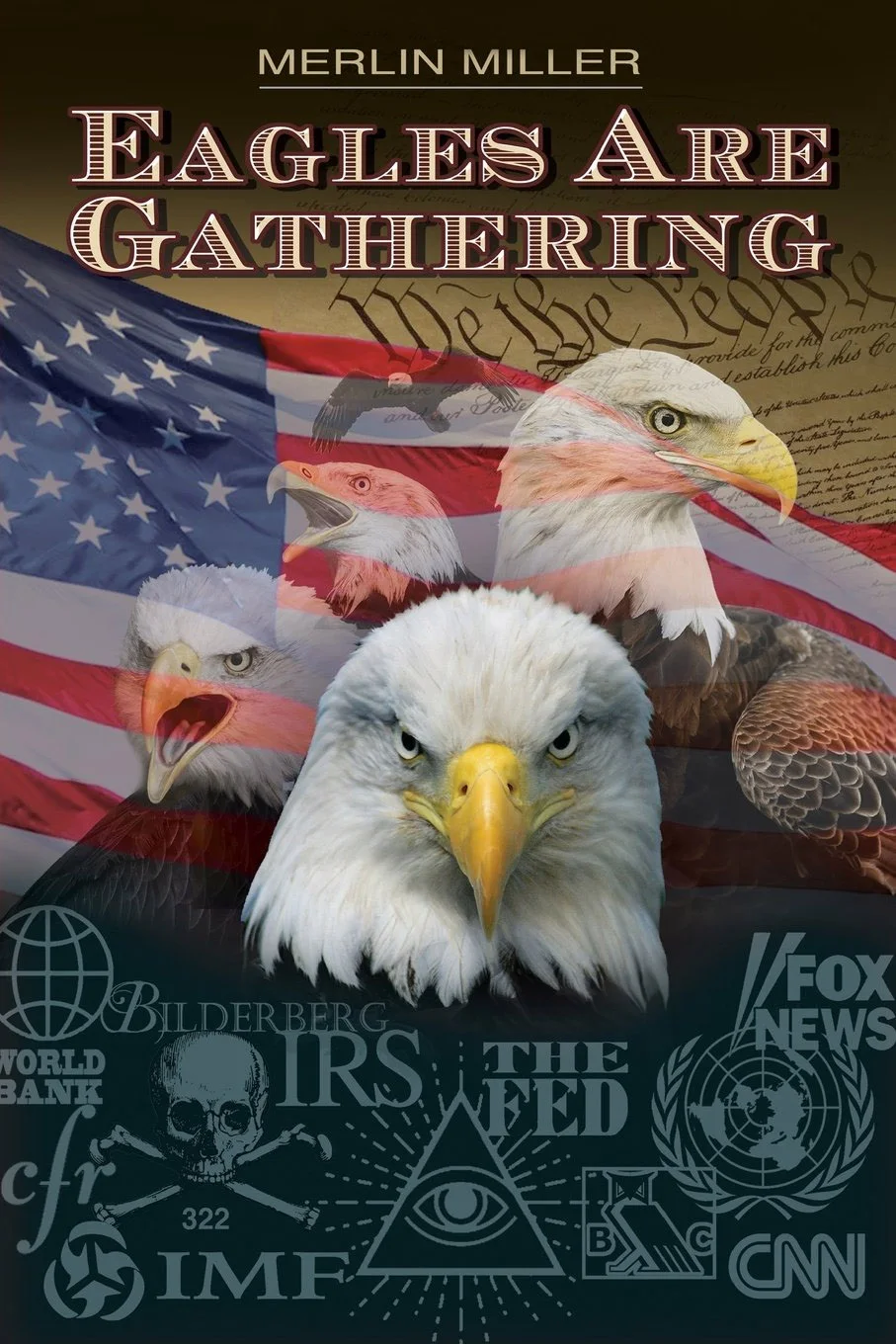
Merlin L. Miller is an American independent filmmaker, political activist, and author who emerged in the early 2000s advancing a worldview marked by strong skepticism of global institutions, media influence, and elite power structures.
Eagles Are Gathering (American Free Press, 2016) is Miller’s most notable book, combining political critique and sweeping historical claims, including his treatment of the Scofield Bible as part of a broader narrative involving coordinated ideological influence on Western Christianity. His one reference to Scofield reveals how established the conspiracy narrative had grown by 2016.
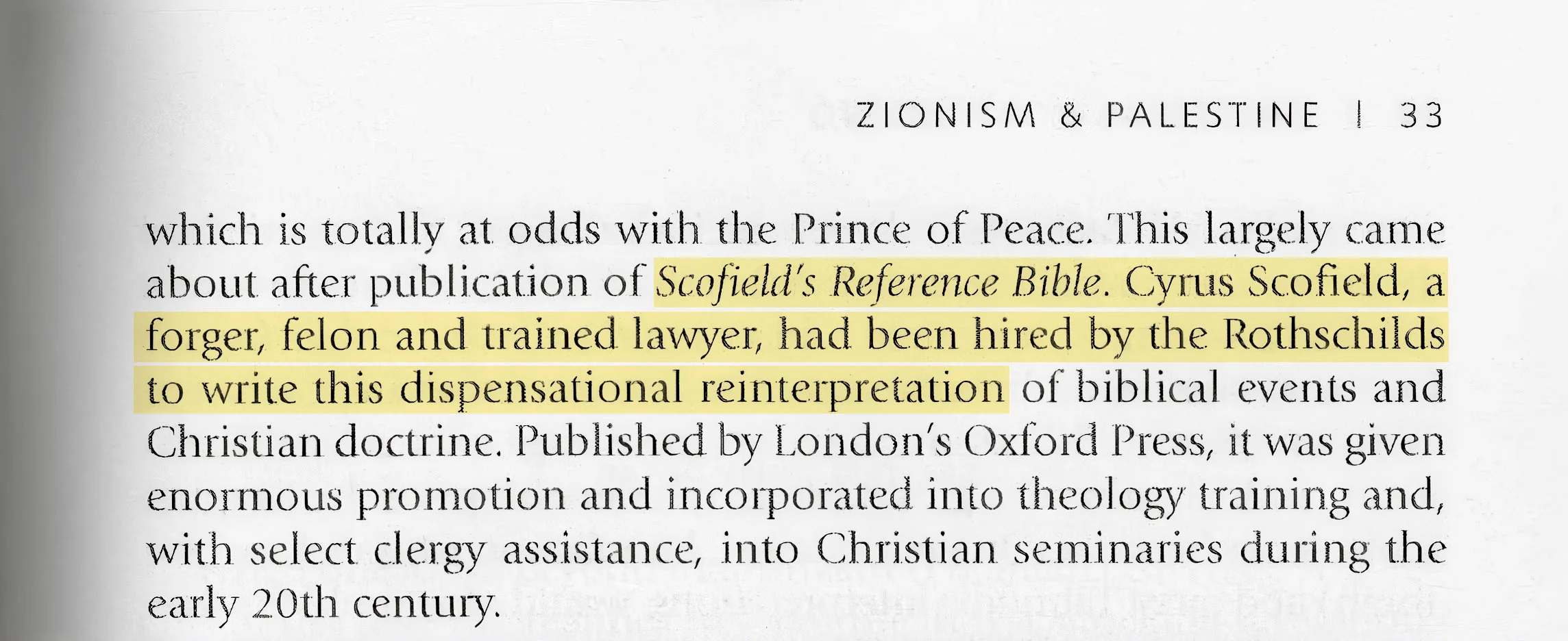
Miller repeats the main points of the conspiracy as if it were established fact, but it is quite interesting that he does not cite any sources here. Lamentably, it appears that these allegations were getting so widespread by 2016 that writers were considering them as common knowledge.
We see the imaginative scheme condensed into an economy of words: an immoral C.I. Scofield is hired by a dark global dynasty to inject unbiblical theology into a study bible, in order to pervert American Christianity (and ultimately to help bring about the reestablishment of the State of Israel). The tiny mustard seed of accusation has indeed grown into a veritable forest of assertions.
No support. No evidence.
Plenty of imagination.
The formula has triumphed:
ASSUMPTION – EXAGGERATION – REPETITION.
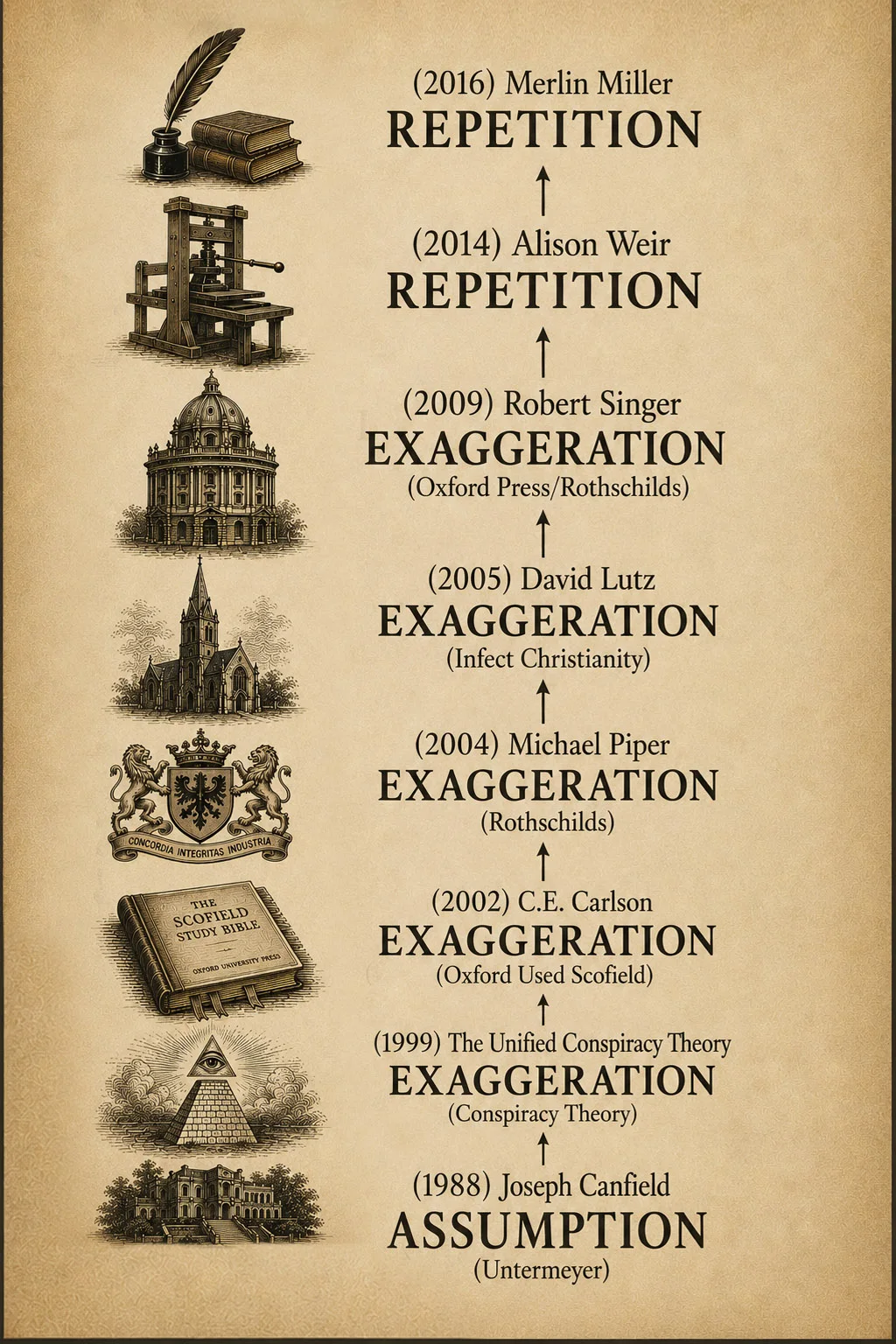
Now that we have examined the history and progression of the content of the conspiracy theory surrounding Scofield and his study bible, CLICK HERE to examine how this fringe theory went viral in 2025 and continues to stay popular. We will look at this theological and cultural wildfire, from spark to full blaze.
© 2026 Scofield-Files.com